If you have ever searched water pressure regulator explained, the search probably started with something small. The shower suddenly hits harder than it used to. A faucet sounds sharper. A toilet fills with more force than feels normal. Sometimes the problem goes the other way and the pressure starts shifting from one day to the next. Most homeowners do not go looking for a valve because they care about valves. They do it because the house feels different.
At EZ Flow Plumbing, we take that seriously because pressure issues rarely stay in the category of “how the water feels.” The EPA notes that supply pressure can reach 100 psi or more, and WaterSense says residential fixtures perform best when incoming pressure stays between 45 and 60 psi. It also notes that high pressure can damage pipes, fixtures, and appliances while increasing leaks and water use.
Water Pressure Regulator Explained: What It Is Actually Doing
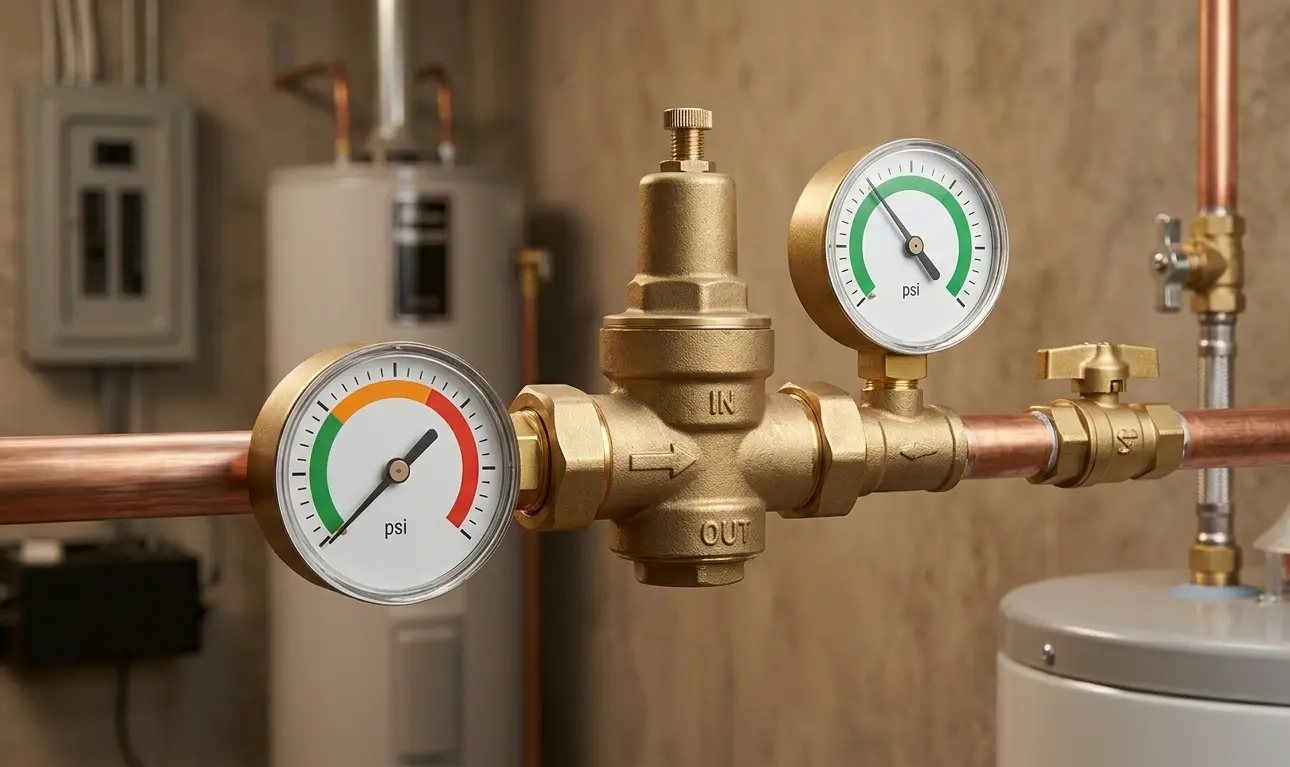
A water pressure regulator, also called a pressure reducing valve, is there to lower incoming water pressure to a safer working level inside the house. Watts explains that the valve reduces high incoming pressure from the city main and maintains a set downstream pressure, usually around 50 psi in a home.
That sounds technical until you picture what it means in real life. The regulator sits between outside pressure and the plumbing inside your walls. Without it, the system may be carrying more force than it needs day after day. At EZ Flow Plumbing, that is why we do not look at pressure regulation as a comfort feature. We look at it as protection for everything the house depends on.
Why Water Pressure Regulator Explained Matters in Real Homes
The reason this matters is not the valve itself. It is what the valve protects. Watts says high water pressure in a home can lead to banging pipes, dripping faucets, leaking water heaters, noisy appliances, and premature wear on plumbing materials. EPA guidance makes the same point in broader terms by noting that excessive pressure increases the risk of leaks and damage across the plumbing system.
That is what makes pressure trouble easy to underestimate. A strong shower can feel good. A faucet with extra force does not immediately sound like a repair issue. Then the smaller signs begin to pile up. A fill valve gets noisy. A faucet starts dripping sooner than it should. A shutoff valve ages faster. A pipe knocks when water stops moving. Pressure tends to show up through wear long before most people connect the dots.
That is why pressure-reducing valve plumbing matters more than it gets credit for. The regulator is not there to make water feel weak. It is there to keep the system working in a range that makes sense for daily use and long-term durability.
Water Pressure Regulator Explained When Pressure Starts Feeling Wrong
A failing regulator can be confusing because it does not always create one neat symptom. Sometimes homeowners assume they suddenly have high pressure because the valve is no longer controlling it well. Sometimes the complaint is the opposite and the pressure starts falling too low or changing from fixture to fixture. Watts explains that pressure reducing valves are designed to maintain a set downstream pressure, which means when the pressure starts drifting outside that range, the regulator becomes part of the conversation very quickly.
This is where people often lose time. They chase one symptom at a time. A rough shower. A loud faucet. A toilet that sounds different. The house is giving clues, but the clues do not always point obviously to one control valve. We do not like solving pressure complaints from guesswork because pressure is a system issue. If it feels wrong in more than one part of the house, we want to test and confirm what is actually happening before treating the symptom like an isolated problem.
This is also where a high water pressure solution needs to be more thoughtful than “turn something down and hope for the best.” The answer depends on whether the incoming pressure is too high, whether the regulator is failing, or whether another plumbing condition is making the pressure feel worse than it really is.
What Water Pressure Regulator Explained Looks Like in a Real Service Call
When we walk into a home with pressure complaints, we are not just asking whether the water feels strong or weak. We want to know whether the problem is steady or intermittent, whether it changes by fixture, whether it shows up after appliances run, and whether there are signs of wear already developing elsewhere in the system.
WaterSense says homeowners can check service pressure with a gauge at a hose bibb and identifies 45 to 60 psi as the best operating range for residential fixtures. Once pressure climbs much higher than that, the conversation moves away from comfort and into system stress. Once it falls too low, the problem may point to a failing regulator or another plumbing issue that needs a closer look.
At EZ Flow Plumbing, that is why we like to ground pressure complaints in measurement and system behaviour, not impressions alone. Homeowners usually describe the feeling first, which makes sense. Our job is to connect that feeling to what the plumbing is actually doing. The right answer usually becomes much clearer once the pressure is measured and the regulator is evaluated in context.
Water Pressure Regulator Explained: Why It Protects More Than Pipes
A lot of people think of pressure only in terms of piping. The reality is bigger than that. Faucets, appliance hoses, shutoff valves, water heater components, fill valves, and fixture internals all live under the same pressure conditions. EPA guidance notes that excessive pressure can shorten equipment life, raise water use, and increase the chance of leaks. Watts ties that same pressure to dripping fixtures, noisy appliances, and premature wear.
That is why this subject matters even when nothing has failed yet. Pressure is one of those forces that can age a plumbing system quietly. A house can carry too much of it for months or years before anyone names it. By the time the signs are obvious, the regulator may no longer be a small detail. It may be the reason several small problems have started showing up at once.
That is the part of water pressure regulator explained that matters most to us. The regulator is not just a valve hidden near the service entry. It is one of the controls that helps the rest of the plumbing system live a longer, steadier life. At EZ Flow Plumbing, we talk about it that way because homeowners deserve to understand what the part is really doing for the house.
And that is also why water pressure regulator explained should never be reduced to a simple hardware definition. In a real home, it is about protecting the system before excess pressure starts collecting its own repair bill.