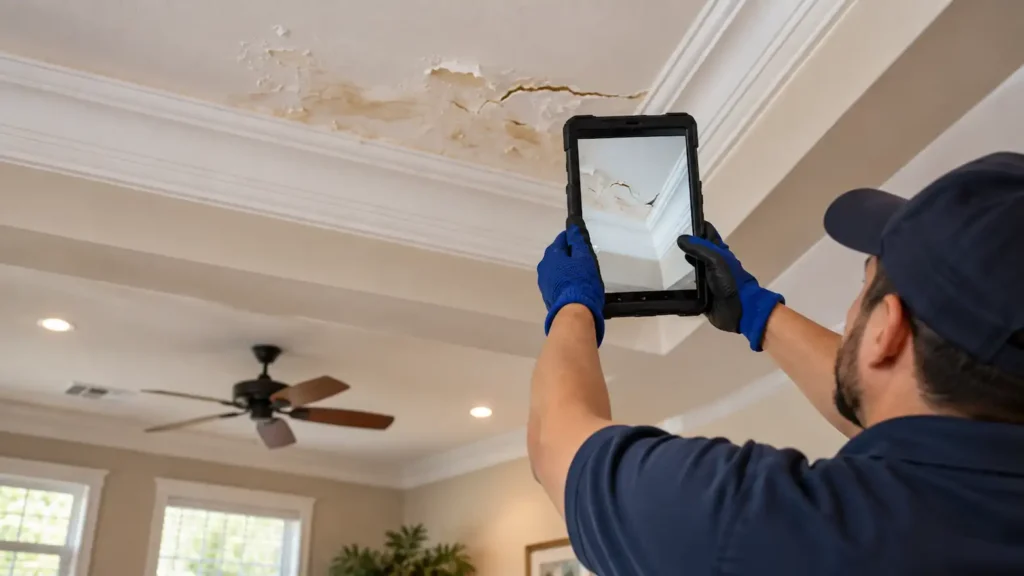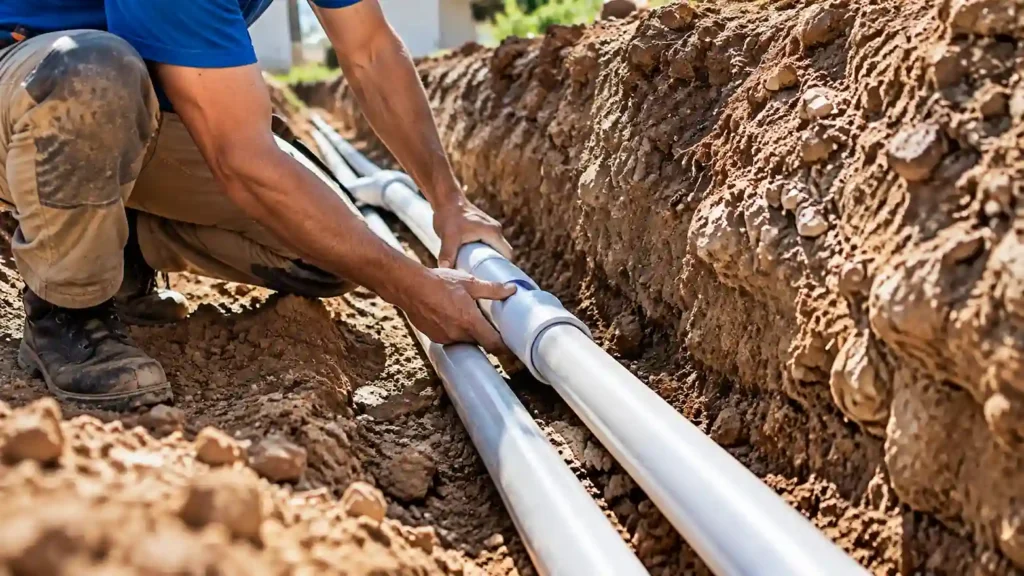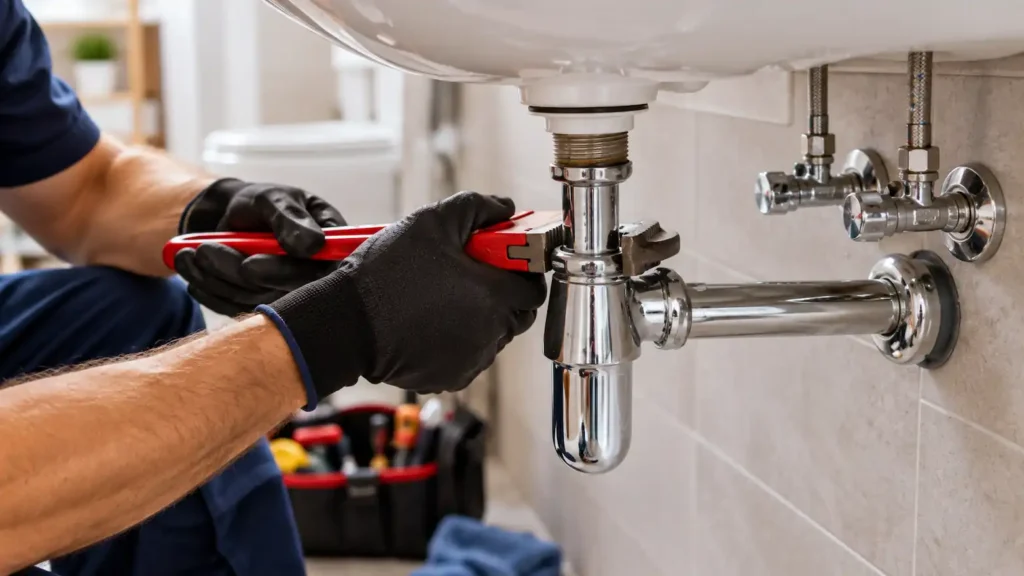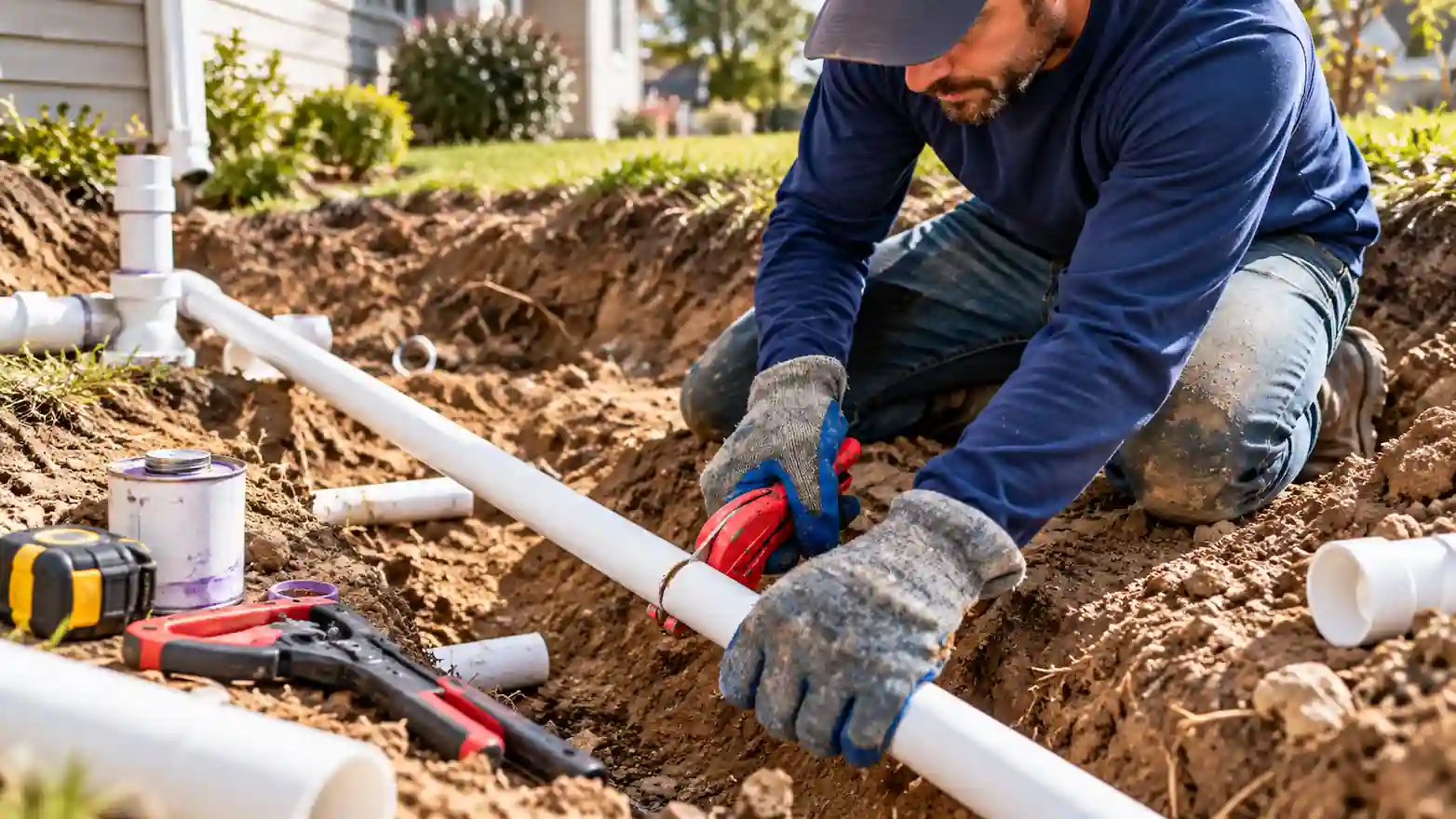
Concrete slab plumbing repair is the process of finding and fixing a problem in a water line or drain that’s under or inside the concrete part of a house. It doesn’t always mean taking up the floor to get to the broken pipe. The work can be different. It can be a leak that is found with special sound tools and fixed in one place. It can be a broken part of a drain that needs digging under the floor or moving the pipe through the walls or ceiling.
The term is often thought to mean that a big part of the floor will be removed. That is not always the case. A good repair starts with a check to find out where the problem is, how deep it is and what kind of damage has been done. This check happens before any concrete is broken. The check decides what work is needed. It is based on what the pipe’s actually showing, not what the problem looks like from the top.
We help people in Austin, Pflugerville, Round Rock, Georgetown and Hutto who notice something is wrong, under their home. They want to understand what concrete slab plumbing repair really means before making any choices. At EZ Flow Plumbing Texas we always start with a check. What the tools find, not what the problem looks like from above decides what needs to be done.
Why Slab Plumbing Fails in Austin and Central Texas
Concrete slab plumbing repair happens more often in Central Texas than in other places and the reasons are clear. The clay soil in Austin and nearby areas gets bigger when it gets wet and shrinks a lot when it dries out. Pipes that are under a slab go through this same stress again and again for many years. Over time this stress causes problems like separated joints, small cracks or in situations parts of the pipe move completely out of where they were supposed to be.
Water pressure and water type also play a role. The water from Austin’s city supply has more minerals than average which makes copper pipes wear down faster because of small holes forming in them. Homes in some parts of Austin and the nearby areas have water pressure that’s higher than the normal level people, like which is 80 psi. This high pressure makes the parts of the plumbing under the slab wear out faster. These parts are not easy to check or fix regularly.
What a Slab Plumbing Diagnostic Actually Involves
Concrete slab plumbing repair done correctly begins with a diagnostic that confirms where the problem is, what system is affected and what kind of failure has occurred before any repair plan is made. A repair recommendation made without a diagnosis is just a guess disguised as a plan.. That guess often ends up costing more in the long run than if the diagnostic step had been taken seriously from the beginning.
For supply line failures the diagnostic starts with a water meter test. This test checks whether water is still being lost when all the fixtures in the house are turned off. If water is being lost it confirms that a leak exists. Then a pressure test is done to find out which section of the supply system is losing pressure. This helps narrow the search to a pipe run.
Next, electronic leak detection tools and acoustic amplification equipment are used. These tools pick up the vibration patterns made by water escaping through a small crack or hole in the pipe. The sounds travel through the slab and the soil above it. By analyzing these signals the exact location of the leak can be found.
The Three Repair Approaches for Slab Plumbing and When Each Applies
Concrete slab plumbing repair uses one of three primary approaches depending on what the diagnostic confirms about the failure type, the pipe condition, and the surface features above the repair area.
| Approach | How It Works | Best Suited For | Key Considerations |
| Targeted slab excavation | Concrete is cut above the confirmed failure point, the damaged section is replaced, and the concrete is restored | Isolated failure in a pipe that is otherwise in sound condition | Minimal surface disruption, requires confirmed location from diagnostic |
| Pipe rerouting through walls or attic | A new supply or drain line is run through the wall cavities or overhead structure, bypassing the under-slab section entirely | Widespread pipe deterioration, multiple failures, or repeated repairs on the same line | No slab cutting, but requires wall and ceiling access for the new line route |
| Trenchless pipe lining (CIPP) | A resin-saturated liner is inserted into the existing drain pipe and cured in place to form a new interior surface | Drain lines with cracks or root intrusion where the pipe retains enough structure to support the liner | No excavation required, slight interior diameter reduction |
Pipe rerouting is frequently the more practical long-term choice when the camera inspection or pressure testing reveals widespread pipe deterioration throughout the under-slab system. A spot repair on the weakest section of a system where the adjacent pipe shows similar corrosion or damage is a repair that defers the next failure rather than resolving the underlying condition.
What Austin’s Soil and Construction History Mean for Slab Plumbing
Concrete slab plumbing repair is something that happens more often in Austin than many homeowners realize. The special conditions in this area explain why it comes up more than in parts of the country that have similar old homes.
Austin has clay soil, which creates a changing and stressful environment. This is different from areas with stable soil. The National Association of Home Builders has said that expansive soils cause more damage to buildings in the United States than all natural disasters combined. Central Texas is one of the areas with expansive soil in the country.
Pipes that are underground in this kind of soil don’t sit in a calm place. They are always dealing with movement and stress. Over years, this stress builds up and causes problems that would not happen if the same pipes were in sandy soil or loam soil.
Many older neighborhoods in Austin have homes built in the middle of the century. These include areas that were developed in the 1950s and 1960s. A lot of the city’s homes have cast iron drain pipes and copper or galvanized supply pipes that have been under the concrete slabs for 60 to 70 years, in this kind of clay soil. Our plumbing repairs service page covers the full scope of what we assess and address for under-slab plumbing conditions across Austin and Central Texas.
Concrete Slab Plumbing Repair vs. Full Pipe Replacement: Reading the Right Scope
Concrete slab plumbing repair at the spot level is appropriate when the diagnostic confirms an isolated failure in an otherwise sound pipe system. It is not the right answer when the camera reveals conditions that point toward system-wide deterioration.
The criteria that distinguish a spot repair from a broader scope:
Points toward targeted spot repair:
- Single confirmed failure point with sound adjacent pipe
- Pipe material in adequate condition throughout the assessed run
- First failure on this system without prior service history
- Camera confirms clear, unobstructed pipe in adjacent sections
Points toward pipe reroute or broader replacement:
- Camera reveals multiple cracks, root intrusion, or damage at several locations
- Prior concrete slab plumbing repair on the same system within the past few years
- Pipe material confirmed as cast iron or galvanized steel with widespread corrosion visible
- Foundation movement or settlement suggesting soil undermining from long-term leak activity
A plumber who reviews the full camera footage and pressure test results before recommending a scope is giving a recommendation grounded in what the system actually shows. A recommendation made without those diagnostic steps is a scope that may expand significantly once the slab is opened and the actual pipe condition is visible for the first time.
Getting a Concrete Slab Plumbing Repair Assessment That Leads to a Real Answer
Concrete slab plumbing repair done right leads to a confirmed problem area, an evaluation of the pipe’s condition and a suggestion for repair that the homeowner can look at before deciding to go with any work. This order, where diagnosis comes first and then the recommendation is what makes a service call effective or risky. It stops someone from breaking the slab in the wrong spot or suggesting a full pipe replacement when a small fix would have been enough.
The homeowner who knows that the problem is part of a system and that the diagnosis shows exactly where the issue is is in a much better place to understand what they are being told. They can ask the questions before any work starts. The diagnostic is not a first step before the real job. It is the base for a concrete slab plumbing repair plan that’s just right, correct and worth the money spent.
If you are seeing symptoms that point toward a slab plumbing problem and want a clear assessment before any work begins, contact EZ Flow Plumbing Texas to plan the right concrete slab plumbing repair service for your property.