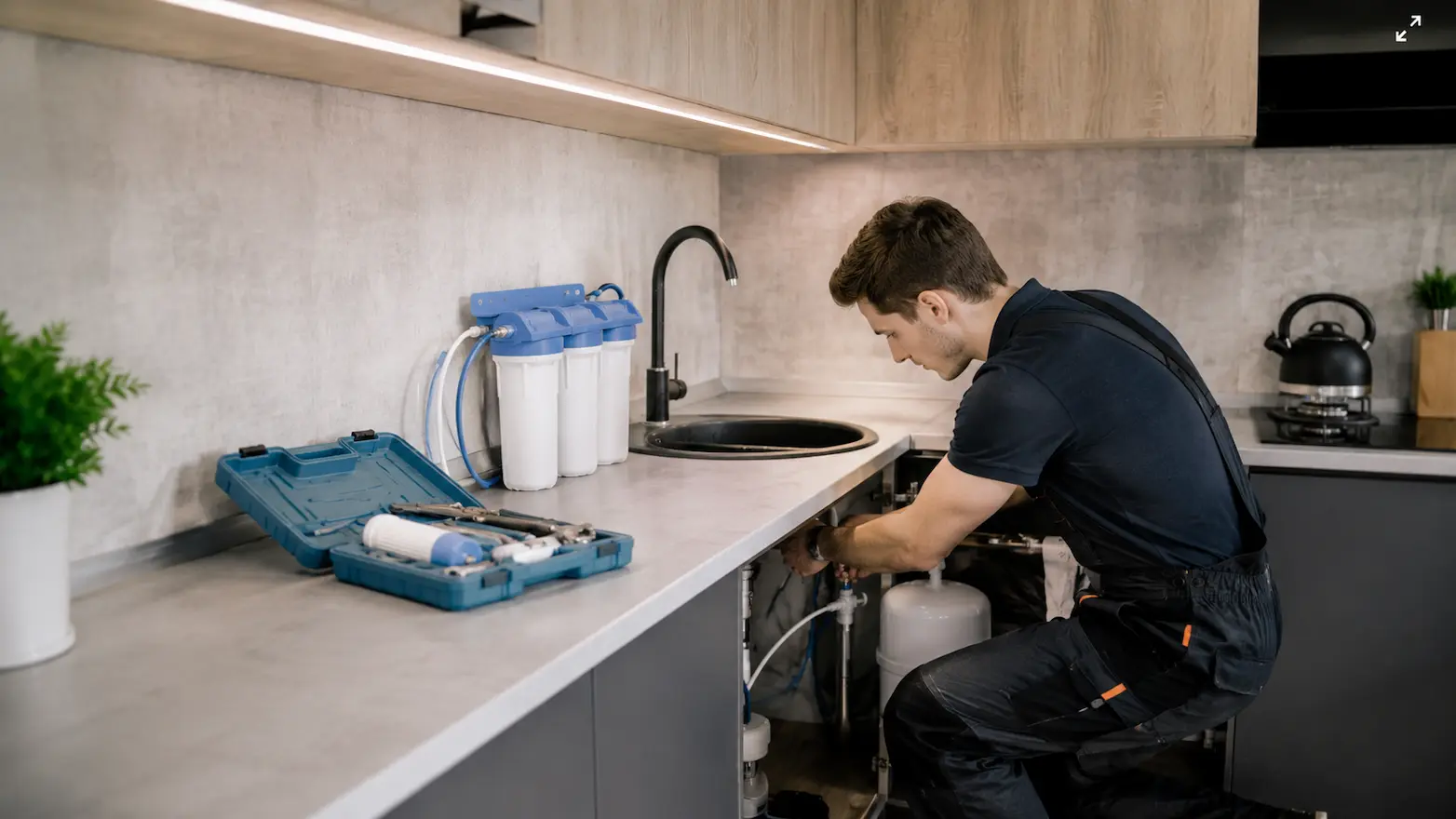
A whole house water filtration system treats water near the point where it enters the property, so filtered water can move through the plumbing system before reaching fixtures, showers, appliances, and taps. The right system depends on the water concern, plumbing layout, flow demand, maintenance needs, installation space, and whether the issue is actually filtration.
For Austin-area homes and businesses, this decision often begins with something noticeable. Water may taste different. Fixtures may stain. Sediment may appear. Appliances may show scale. Shower water may feel harsh. A business may want more consistent water quality for restrooms, employee areas, cleaning, or customer-facing spaces.
At EZ Flow Plumbing, we treat a whole house water filtration system as a plumbing decision first. The system has to fit the property, connect properly, protect flow, and make sense for the concern being solved. A good choice starts with diagnosis, not a product guess.
What does a whole house water filtration system actually do?
A whole house water filtration system is designed to treat water before it travels through most or all of the property. This is different from a small filter at one faucet. A point-of-use filter may support drinking water at a kitchen sink, while a point-of-entry system is connected closer to the main supply.
That difference matters because the goal is broader. A homeowner may want filtration before water reaches showers, laundry, dishwashers, water heaters, toilets, and bathroom sinks. A business may want consistent water quality across restrooms, break rooms, utility sinks, or cleaning areas.
The system should not be chosen only by size or marketing claim. Water conditions, plumbing age, pipe material, pressure, and daily demand all affect the decision.
Signs a filtration decision may be worth reviewing
A whole house water filtration system may be worth reviewing when water concerns show up in more than one place. If only one faucet has an issue, the problem may be fixture-specific. If several fixtures show similar symptoms, the concern may be coming from the water supply, main line, water heater, old pipes, or mineral content.
Common signs include cloudy water, visible particles, unusual taste, odors, staining, scale on fixtures, recurring appliance buildup, or water that feels different across the property. Some issues point toward filtration. Others point toward water softening, plumbing repair, line corrosion, water heater sediment, or pressure concerns.
This is why plumbing diagnosis matters. The visible symptom is only the starting point. A good service visit should help separate water quality concerns from plumbing system problems.
Filtration, softening, and plumbing repair are not the same thing
A whole house water filtration system is not the same as a water softener. Filtration is usually aimed at reducing certain particles, odors, tastes, chemicals, or contaminants depending on the filter type. A water softener is typically used to address hardness minerals that create scale, spots, and buildup.
Some properties may need filtration. Some may need softening. Some may need both. Others may have a plumbing repair issue that no filter will solve. For example, rust-colored water may come from old piping, a water heater, or supply conditions.
If hard water is the main concern, reviewing water softener installation can help clarify whether mineral control belongs in the plan. The right recommendation should match the actual issue, not force every symptom into the same solution.
| Concern | Does filtration help? | Does softening help? | Is plumbing repair needed? |
| Sediment or particles | Yes, depending on filter type | No | Possibly, if pipes or water heater are involved |
| Scale on fixtures | Not usually the main fix | Yes | Possibly, if flow is restricted |
| Strange taste or odor | Often | Not usually | Possibly, if one fixture is affected |
| Low pressure | Sometimes if caused by debris | Not directly | Often worth checking |
| Rust-colored water | Sometimes | No | Often worth checking |
What should be checked before installation?
A whole house water filtration system should be reviewed against the property’s plumbing conditions before installation. The main line location matters. Available space matters. Shutoff valves, bypass options, pressure, pipe material, drainage needs, maintenance access, and flow rate all matter.
A system that looks good online may still be a poor fit if the property does not have the right access or if the water demand is higher than the system can comfortably support. Oversizing can create unnecessary costs. Undersizing can reduce performance or create frustrating flow problems.
A licensed plumber should also check whether the concern is better solved by a filter, softener, repair, pressure adjustment, or fixture-specific solution.
How to choose a whole house water filtration system
A whole house water filtration system should be chosen by goal, not by label. The first question is simple: what are you trying to reduce or improve? Sediment, taste, odor, chlorine, hardness, staining, and specific contaminants do not always require the same approach.
The second question is where treated water is actually needed. If the concern is drinking and cooking water only, a point-of-use system may be enough. If the concern affects showers, laundry, appliances, and multiple fixtures, whole-house treatment may make more sense.
The third question is maintenance. Filters need replacement. Some systems need periodic service. Some may affect pressure if they are not maintained.
| Decision point | What to ask before choosing |
| Water concern | What problem are we trying to solve? |
| Property type | Is this for a home, rental, office, restaurant, or facility? |
| Flow demand | Will the system support peak use? |
| Space | Is there room for installation and service access? |
| Maintenance | How often will filters or media need attention? |
| Plumbing condition | Are pipes, valves, pressure, and fixtures ready for the system? |
When a filter will not fix the real issue
A whole house water filtration system can be useful, but it is not a cure for every water complaint. If the problem is caused by a failing water heater, corroded pipes, pressure imbalance, fixture buildup, or a leak, filtration alone will not correct the plumbing issue.
This is where plumbing repair becomes part of the conversation. A property owner may notice discolored water and assume filtration is the answer, but the water heater may be the source.
A local plumbing service should look at the full system before recommending equipment.
Pros and limits of whole-house filtration
A whole house water filtration system can offer real benefits when the system matches the water concern and property layout. It can help create more consistent water across the building, reduce certain unwanted particles or qualities, and support a more complete treatment plan than a single faucet filter.
The limits matter too. Whole-house systems can cost more than point-of-use systems. They may need plumbing changes. They require maintenance. They may not address hardness unless paired with softening. They may not reduce every contaminant unless certified and selected for that specific claim.
| Pros | Limits |
| Treats water before it reaches many fixtures | Higher upfront cost than single-faucet filters |
| Can support showers, laundry, appliances, and taps | Requires space and proper plumbing connection |
| Helps when concerns affect the whole property | Needs filter changes or service |
| Can be part of a broader water treatment plan | Not every system treats every contaminant |
| Reduces reliance on small fixture filters | Wrong sizing can affect flow |
A balanced decision looks at both sides. The goal is not to buy the biggest system. The goal is to install the right one for the actual water and plumbing conditions.
What a plumber should review during the visit
A whole house water filtration system visit should include more than a quick look at the main line. A useful plumbing diagnosis may review water symptoms, fixture patterns, pressure, pipe layout, shutoff access, water heater condition, filter location, and whether the concern affects hot water, cold water, or both.
The plumber should ask practical questions. Do stains show up in toilets, sinks, showers, or appliances? Is the issue constant or seasonal? Did it start after work was done on the plumbing system? Is the property on municipal water or another source?
Clear answers help guide the next step. Sometimes the recommendation is filtration. Sometimes it is softening.
Why EZ Flow Plumbing versus guessing online?
A whole house water filtration system is connected to the plumbing system, so the decision should not be made from product claims alone. Online comparisons can help explain options, but they cannot inspect the property.
At EZ Flow Plumbing, we focus on practical diagnosis before recommending the next step. We serve Austin-area homes and businesses, and we understand that water concerns can be frustrating when every answer online sounds too simple.
The value of working with a licensed plumber is not only installation. It is knowing whether installation is actually the right move. A good recommendation should explain the issue, the reason behind the option, and what the property owner should expect after the work is done.
How businesses should think about filtration
A whole house water filtration system for a business should be reviewed with daily operations in mind. An office may care about restroom and break room consistency. A salon may care about water feel and fixture buildup. A restaurant may have different needs across dish areas, restrooms, and cleaning zones.
Commercial use can change the sizing conversation. Higher demand, longer operating hours, more fixtures, and customer-facing spaces all affect the plan. Maintenance also matters because ignored filters can create flow complaints or reduce system performance.
Business owners should treat water treatment as part of facility planning. The system should support operations without creating avoidable service issues later.
Schedule a practical water and plumbing review
A whole house water filtration system can be a smart investment when the concern is real, the system is properly selected, and the plumbing is ready for the installation. It can also be the wrong answer when the issue is hardness, a failing fixture, pipe corrosion, water heater sediment, pressure loss, or another repair problem.
The safest decision starts with a clear look at the property. What is the symptom? Where does it appear? Does it affect hot water, cold water, or both? Those answers help separate filtration from plumbing repair and keep the next step practical.
At EZ Flow Plumbing, we help Austin-area homes and businesses look at water concerns with the right level of care. Book a service visit with us and get the issue looked at properly. We can review service options before the problem becomes harder to solve.