Bolting a new unit under the sink and hoping it grinds is not what garbage disposal installation actually requires. The drain line, the electrical connection, and the mounting hardware all have to work together, or the unit ends up leaking, tripping breakers, or simply refusing to run. For Austin kitchens, that overlap between plumbing and electrical work is exactly why a job that looks simple on paper can turn into something more involved once someone opens the cabinet.
People usually start thinking seriously about garbage disposal installation for one of two reasons. The old unit finally gave out after years of grinding scraps, or a kitchen remodel calls for a sink setup that needs a disposal built in from the ground up. Those two situations look alike from the outside, but the remodel version tends to involve a lot more plumbing decisions than most people expect going in.
At EZ Flow Plumbing, a rushed installation is treated as a real risk, not just a shortcut. A poorly seated unit can drip for months before anyone traces the source. A miswired connection can trip breakers or, worse, turn into an actual shock hazard under the sink. Walking through those details up front costs far less than fixing a bigger mess after the fact.
What Actually Goes Into Installing A Disposal
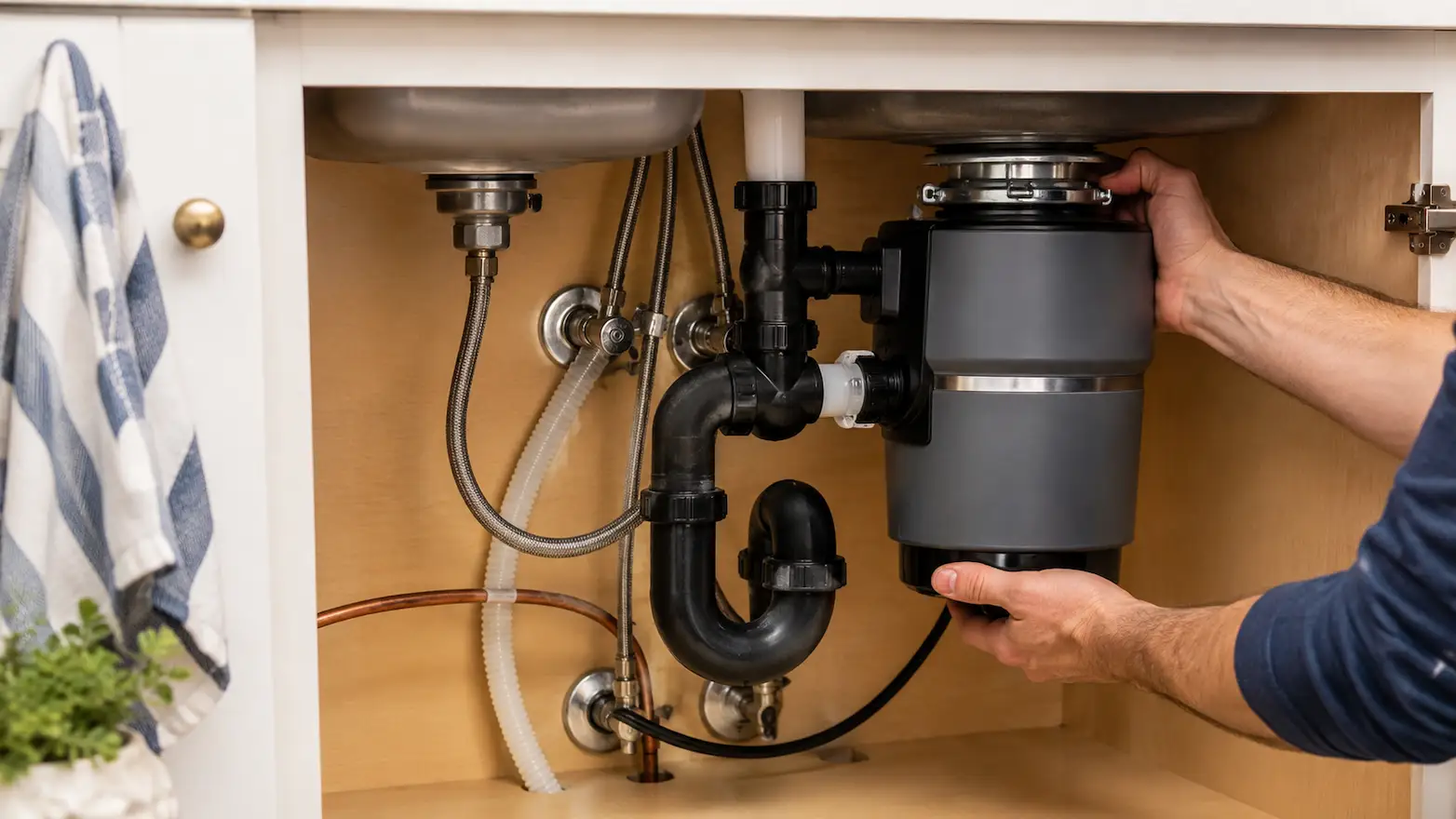
Three separate systems meet in one small space during any garbage disposal installation: the drain plumbing, the electrical supply, and the mounting hardware holding the unit to the sink flange. Skip one of those pieces and a same day job has a good chance of turning into a return visit.
The drain side needs to line up with whatever plumbing configuration already exists, which gets trickier in kitchens with a double basin or a dishwasher sharing the same line. The electrical side needs a properly rated outlet or hardwired connection sitting somewhere the cord or wiring can reach without straining. The mounting hardware needs to seat evenly against the sink so nothing wobbles or seeps once the motor kicks on.
Garbage disposal installation done right accounts for every one of those pieces from the start, rather than treating the plumbing and the wiring like two separate jobs handled by whoever happens to show up that day.
When A Disposal Not Turning On Traces Back To How It Was Installed
Blaming a jam or a tripped reset button is the usual first move when a disposal not turning on shows up, and sometimes that guess is exactly right. But a brand new unit that refuses to start, or an older one that stops working right after other kitchen work wrapped up nearby, points somewhere different, usually toward how it went in rather than how it has been used.
A loose electrical connection, a circuit that never got properly energized, or mounting hardware pressing against internal components can all leave a disposal not turning on no matter how many times someone hits reset. None of those causes fix themselves with patience.
Timing matters here. If a disposal not turning on happens soon after garbage disposal installation, the fix usually belongs with whoever did the install, not with the appliance sitting under the sink.
Why Sink Plumbing Decides More Than People Expect
Sink plumbing rarely cooperates automatically with a new disposal, especially in older Austin homes built long before disposals were standard kitchen equipment. A single basin sink offers a fairly direct path. Add a double basin with a dishwasher connection already claiming space, and the layout gets noticeably tighter.
Years of patched repairs or a prior remodel can leave sink plumbing in a shape that does not quite match a new disposal’s drain outlet against the trap arm underneath. When those two points refuse to line up cleanly, some installers force the fit anyway, and a slow leak develops that nobody traces for months.
Looking at the existing sink plumbing before ever opening the disposal box is where garbage disposal installation should actually begin. What slides neatly under one sink will not necessarily fit under another, even in kitchens that look nearly identical.
First Time Installation Versus Swapping Out An Old Unit
A first time garbage disposal installation and a straightforward replacement share plenty of steps, but calling them the same job undersells the difference. Installing a disposal where none existed before usually means adding a switch, confirming a suitable circuit sits nearby, and sometimes reworking sink plumbing to accept the new drain outlet.
Swapping an existing unit tends to go faster, since the wiring and drain configuration are already sitting in place. The open questions become whether the old mounting assembly fits the new unit and whether the existing wiring still holds up to current safety expectations.
| Situation | First Time Installation | Replacement Installation |
| Electrical connection | May need a new circuit or outlet | Usually already in place |
| Sink plumbing | May need adjustment | Typically already compatible |
| Mounting hardware | Requires a new assembly | May reuse existing mount if it fits |
| Overall complexity | Higher, more unknowns | Lower, fewer surprises |
| Common surprise | Hidden plumbing or wiring gaps | Corroded or mismatched mounting parts |
The Electrical Side Nobody Thinks About Until It Matters
Garbage disposal installation gets treated like a purely plumbing task right up until the electrical piece causes trouble. The space under a kitchen sink counts as a location near water for electrical purposes, and that classification is exactly why outlets and circuits feeding a disposal carry specific safety requirements.
The National Fire Protection Association’s electrical code covers ground fault protection for receptacles sitting near kitchen sinks, since water and live wiring sharing the same cabinet space creates a genuine shock risk if something fails. That standard is part of why disposal work sometimes calls for plumbing and electrical coordination rather than one trade quietly handling everything solo.
Skipping that coordination will not always cause an obvious problem right away, but it can leave a garbage disposal installation that technically runs while quietly falling short of what current safety expectations call for.
What Tends To Go Wrong When The Job Gets Rushed
Leaks at the mounting flange, a disposal not turning on because of a loose wire nut, and drain alignment issues that only surface once the dishwasher and disposal run together are the problems that show up most often after a rushed garbage disposal installation.
Rushed work also tends to skip smaller details that matter down the line, like whether the unit gets proper support so its full weight is not hanging off the drain connection alone. That kind of strain rarely announces itself on day one. Instead it shows up as a slow leak months later.
None of these problems look dramatic in isolation, but stacked together they turn into callbacks and repeat visits that a more careful first pass would have sidestepped entirely.
Recognizing When The Job Needs More Than A Quick Swap
A straightforward garbage disposal installation, where the new unit closely matches the old one, is sometimes manageable without much fuss. That changes once sink plumbing needs adjusting, the electrical setup looks dated, or the kitchen is getting reworked as part of a bigger remodel.
A few signs showing up together usually mean the job deserves professional eyes: a disposal not turning on despite a fresh reset, visible corrosion on the mounting hardware, an outlet that looks original to a decades old kitchen, or sink plumbing that has clearly been patched more than once already.
Garbage disposal installation in any of those situations benefits from someone able to weigh the plumbing and the electrical side together, instead of guessing which one is actually the culprit.
What Separates A Careful Installer From A Rushed One
Look for someone who inspects the sink plumbing and the electrical connection before ever quoting the job, rather than assuming a standard installation fits every kitchen the same way. A team willing to explain what they are checking, and why, tends to catch problems before those problems turn into callbacks.
A dependable installer should be willing to say when a garbage disposal installation needs more than a simple swap, whether that means updating a circuit, adjusting sink plumbing, or replacing aging mounting hardware instead of reusing it. That honesty upfront saves more money than the shortcut ever would have.
Our approach at EZ Flow Plumbing starts with exactly that kind of inspection, which we walk through in more detail on our garbage disposal service page.
Getting Your Installation Scheduled
Garbage disposal installation is a small project carrying a surprising amount of weight in its details, from drain alignment to the electrical connection to the mounting hardware holding it all together. Getting those pieces right the first time is what separates a disposal that runs quietly for years from one that keeps generating service calls.
At EZ Flow Plumbing, sink plumbing and electrical setup both get reviewed before anything gets recommended, so the garbage disposal installation matches your actual kitchen instead of a generic checklist. If your disposal keeps acting up, or a remodel has a new installation on the horizon, book a service visit and get the issue looked at properly.
Reach out through our contact page, and we will walk through what your kitchen actually needs before anything gets scheduled.