Gas leak symptoms are the signs that tell us gas or propane is leaking from a pipe, a fitting, or an appliance. These signs can be different depending on where the leak’s how long it has been happening. Some signs are easy to see. Natural gas has a smell added to it, like rotten eggs, so we can tell if there is a leak. This smell is from a sulfur compound called ethyl mercaptan that the utility company adds to the ga.. Just because the gas has this smell does not mean we will always notice a leak right away.
We help people in Austin, Pflugerville, Round Rock, Georgetown, and Hutto who think they might have a gas leak but are not sure. At EZ Flow Plumbing Texas, we take gas leak symptoms seriously, even if the person is not sure what is happening.
The Smell: What It Means and What It Does Not
The smell of an egg or sulfur is what most people in Austin know to look out for. This smell is a gas leak symptoms that there is a gas leak near a gas appliance, a utility closet, or where the supply lines are. The smell does not always tell you how bad the leak is. A small leak inside a cabinet can make the smell very strong in that one place, but you might not even notice it in the next room.
What is more important than how strong the smell is where and when you notice it. If you always smell it in the place or if it is strongest near a certain appliance or part of the wall, that tells you something. If you notice the smell as soon as you enter a room that has been closed for a while, that is also a gas leak symptom. If the smell comes and goes and you cannot figure out where it is coming from, it might be a problem with the supply lines, not the appliance.
Physical Symptoms That Point to Low-Level Gas Exposure
Prolonged exposure to levels of natural gas in a closed area causes a set of physical symptoms that are often linked to other problems. Headache is the common symptom, especially when it happens in one part of the house and goes away after the person spends time outside. Dizziness, nausea, tiredness, and sometimes eye or throat irritation can also happen along with the headache in homes where the gas is present but not noticed.
The pattern that makes gas exposure different from other issues is where the symptoms happen and if they go away. Gas leak symptoms that occur in the kitchen or in the utility room and get better when the person moves to another part of the house, or that affect people and pets in the same place, should be checked instead of being blamed on stress, allergies, or a cold.
Gas Leak Symptoms You Can See or Hear
Not all gas leak symptoms require smell or physical sensation to identify. A hissing or faint whistling sound near a gas appliance, a shutoff valve, a flexible connector, or a section of exposed supply pipe is a direct indicator that gas is escaping under pressure from a specific point. The sound may only be audible in a quiet room or during low household activity, but it is one of the more reliable location indicators available without detection equipment.
Visual gas leak symptoms are less common but unambiguous when they appear. A visible mist or haze near an outdoor gas meter or an aboveground line is an active leak that requires immediate utility contact rather than investigation. Bubbles rising through a wet patch of soil or a puddle along the path of a known underground gas line indicate that gas is escaping below grade and migrating upward through groundwater. Neither of those warrants further observation before acting.
How to Tell Where the Leak Is Coming From
The place where a gas leak happens is important because it affects the kind of symptoms people get and how they need to do something about it. If a gas leak happens near an appliance, the smell is usually strongest near that appliance. It gets weaker in other rooms. This kind of leak often happens because a pipe is old or a connection got loose when someone moved or fixed the appliance, or a valve does not close properly.
These leaks are usually in one area, and people can usually check for them without needing special tools or getting into tight spaces.
Gas leaks in the lines that bring gas to the house, whether they are in the walls or under the floor or outside, between the gas meter and the house, make a kind of smell that spreads out. The smell can be found in places,s and it is hard to figure out where it is coming from. Also, people might start feeling sick before they even notice the smell of the gas leak. The gas leak can make people feel sick. It is important to find it and fix it quickly.
Gas Leak Symptoms by Location: A Quick Reference
Identifying where gas leak symptoms are concentrated helps narrow the diagnosis before the plumber arrives.
- Near the stove or range: Odor strongest when burners are off, or a burner that will not light despite clicking, points to a connection fitting or supply valve issue at the appliance level.
- Near the water heater: A faint sulfur smell in the utility closet or garage combined with pilot light problems suggests a flex connector or gas valve that needs inspection.
- Near the gas meter or exterior wall: A persistent smell outdoors near the meter or along the side of the house where the service line enters indicates a connection or regulator issue that the utility and a licensed plumber need to assess together.
- In the yard with no indoor odor: A defined dead patch over a known underground line with no corresponding smell inside suggests a slow underground escape that has not yet migrated into the structure.
- In multiple rooms without a clear source: Diffuse odor throughout the home with no single strongest point, or physical symptoms affecting multiple occupants, points to a supply line issue between the meter and the appliances rather than a single connection leak.
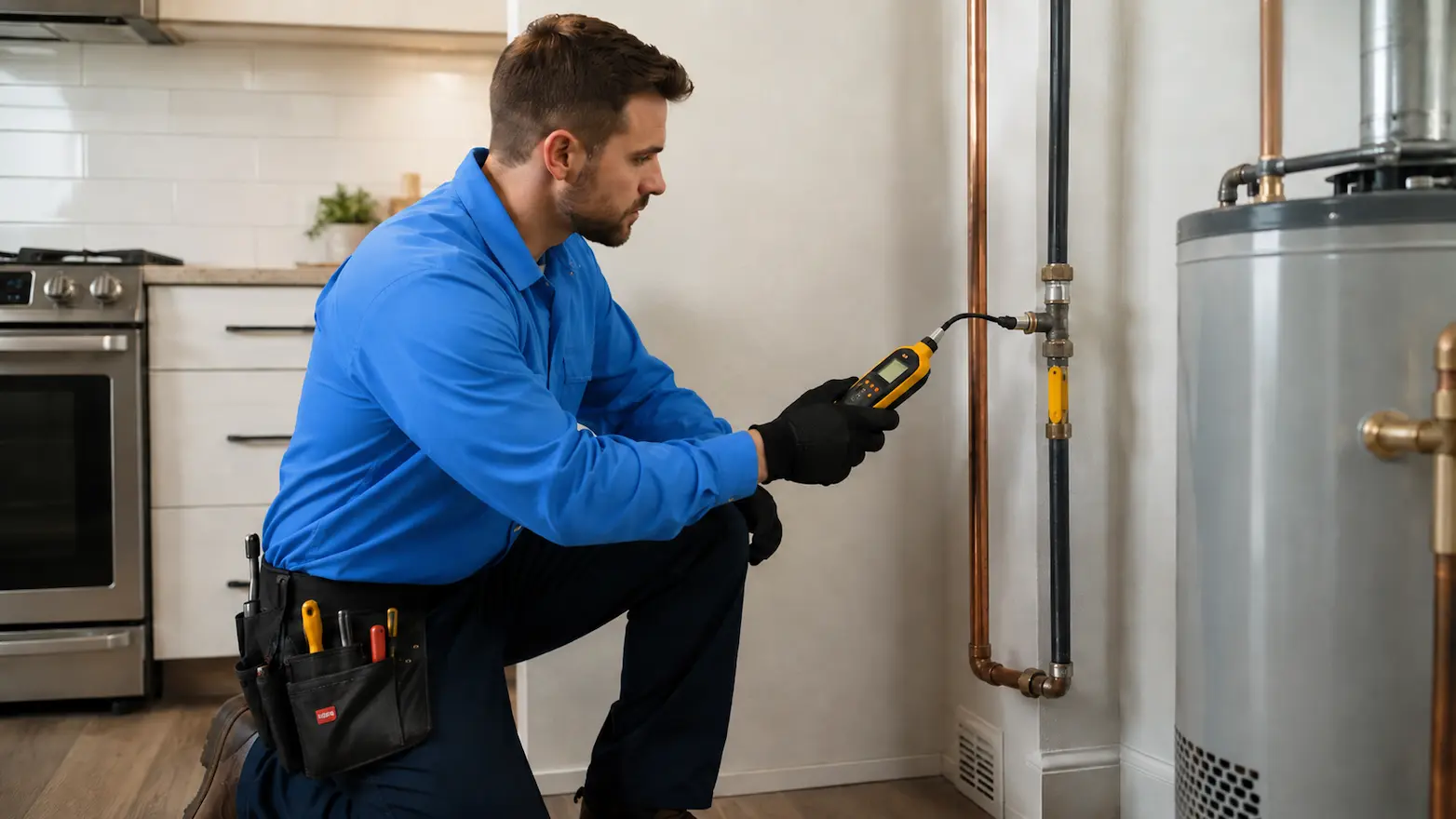
None of these patterns constitute a confirmed diagnosis. They are the starting point for a professional gas line inspection that uses calibrated equipment to confirm what the symptoms are suggesting.
What a Gas Line Inspection Covers
When a homeowner notices a problem with their gas line, they should tell us what is happening, when it started,d and if anything has changed. We also want to know if anything was done to the home around the time the problem started. This information is important because gas leaks do not usually happen without a reason. Maybe a new appliance was installed. Some work was done near a gas line, or the power was out and then came back on, or there was a big storm. Any of these things can cause problems with the gas line.
If we find a leak,k we will figure out what is causing it. Then we can decide how to fix it. If the problem is a loose connection to an appliance,ce that is one thing. If the problem is a pipe that is corroded underground or a broken connector behind a water heater, that is something else. Each problem has its solution, and we can tell the homeowner what needs to be done and how much it will cost.
Our gas leak detection and gas line services page covers how we approach gas line diagnostics, what the inspection includes, and what the repair options look like depending on what the system reveals.
When Gas Leak Symptoms Require Immediate Action
When you have a gas leak, it is important to know if you need to act or if you can wait a little while. The difference between these two kinds of responses to gas leak symptoms is based on how bad the smell’s what other symptoms you have,e and where the smell is coming from. If you smell a gas leak in your home and you feel dizzy or sick, you need to get out of the house right away. Do not turn any lights on or off;f leave the house and call the gas company from outside.
If the smell is not very strong. It has been there for a few days, ys or if you only smell it in one room, oom or if you see a spot where the grass is dead near a gas line,ne or if your gas meter is still running when everything is turned off, then you should have someone come to check it out soon. These are all signs that something might be wrong with your gas,s and you should have it looked at within a day or two. These signs are important. They do not mean you are in danger right now, ow so you do not need to act as fast as you would if you smelled a strong gas smell in your house.
Getting a Gas Line Inspection That Gives You Real Answers
A gas line inspection done correctly either confirms an active leak and identifies the source, or rules out a gas issue and points toward another explanation for what the homeowner noticed. Both outcomes are useful. The one outcome that serves nobody is a visit that relies only on sensory assessment, misses a low-level escape in a well-ventilated area, and leaves the homeowner uncertain about whether the system is safe.
Gas leak symptoms often originate somewhere other than where they are most noticeable, and a thorough inspection accounts for that displacement rather than stopping at the first point the homeowner identified.
If something in your home is not adding up and you want a direct assessment from a licensed plumber serving Austin, Pflugerville, Round Rock, Georgetown, and Hutto, contact EZ Flow Plumbing Texas and start with an inspection grounded in what you noticed.