My toilet keeps running, which means the tank is losing water between cycles. The fill valve is working all the time to refill the tank. This is what makes the sound that homeowners hear. The fill valve is trying to replace the water that the tank should already have.
This happens for several reasons. Sometimes the flapper seal is broken, so water escapes. Sometimes the fill valve does not close properly. Or maybe the float is set high so water spills over the overflow tube before the fill valve turns off.
It is really important to figure out what is wrong the first time. If you fix the part, the toilet will start running again in a few weeks. The actual problem is usually in a part. The way the toilet runs,s whether it is constant or stops and starts, helps us know which part is broken before we even open the tank.
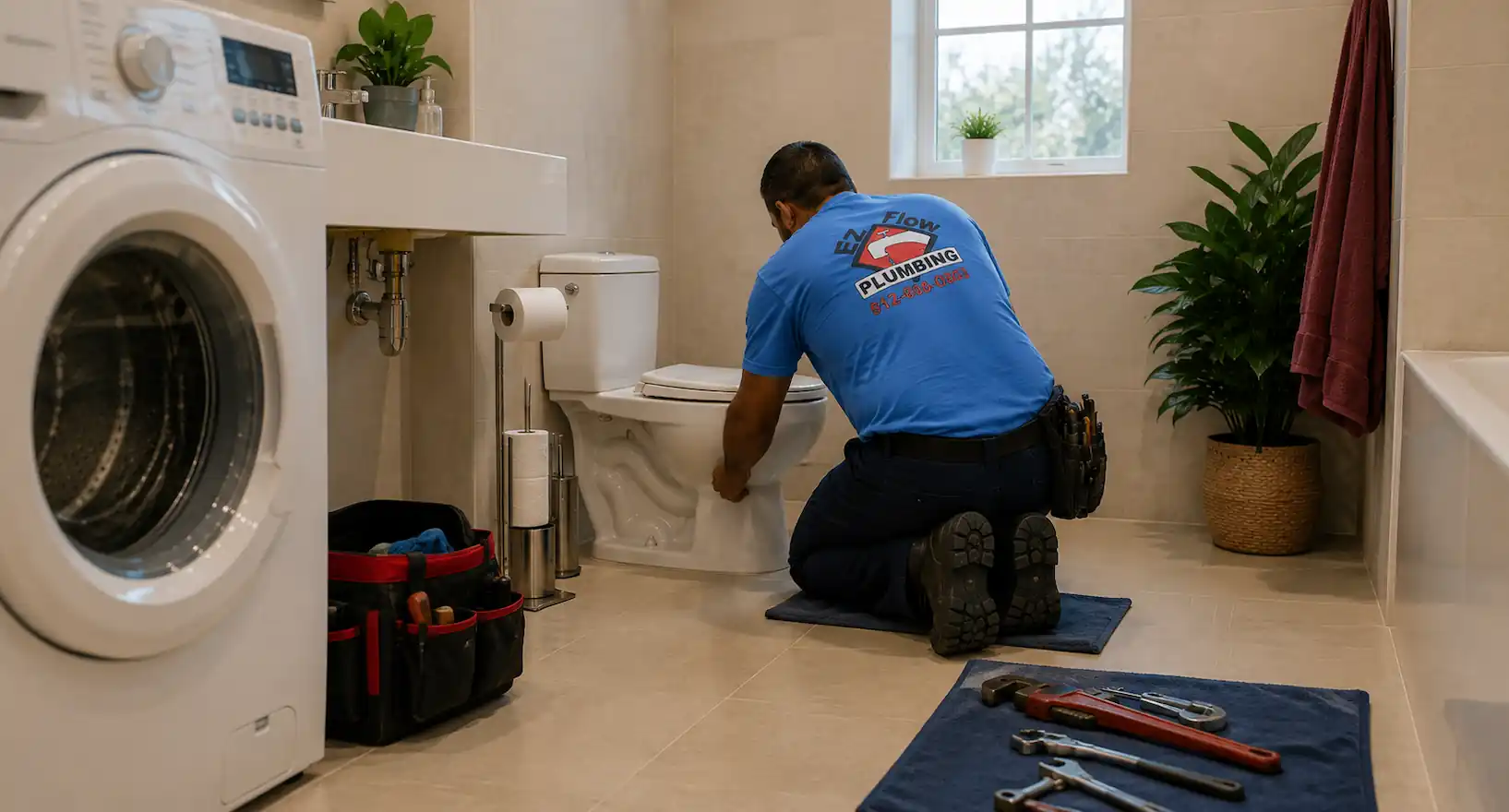
We help people in Austin, Pflugerville, Round Rock, Georgetown, and Hutto who have this problem. At EZ Flow Plumbing Texas,s we start by talking about what the toilet’s doing. The sound it makes and how often it makes it helps us narrow down the problem. My toilet keeps running is the symptom. The real problem is in one of three places. We need to read the pattern to find the cause.
Two Patterns, Two Different Problems
My toilet keeps running in two ways. Each way tells me something about what might be wrong before I even take a look.
- One way is called phantom flushing. This is when the toilet turns on by itself every ten to twenty minutes. Nobody touches the handle. The toilet still activates. The tank fills up with water, then the valve shuts off. It all happens again after a little while. This keeps happening over and over. When this happens, it usually means the flapper is not closing all the way. Water is slowly leaking into the bowl when the toilet is not being used. As the water level in the tank gets too low,w the fill valve turns on for a second to add water.
- Continuous running is the pattern where the toilet never stops. The fill valve stays on, the sound does not pause between flush cycles, and the tank appears unable to reach capacity. That points toward a fill valve that is not shutting off cleanly, a float set too high allowing water to drain over the overflow tube, or both conditions at once.
The Three Components Most Responsible for a My Toilet Keeps Running
My toilet keeps running because of a failure in one or more of three mechanical parts. Each controls a different stage of the refill cycle, and each fails recognizably.
- The flapper is the rubber disc at the bottom of the tank that covers the flush valve opening between uses. When it gets bent becomes hard because of exposure to minerals or gets a calcium buildup along the edge where it sits;s it lets water leak continuously into the bowl without you actually flushing.
- The fill valve is the part that lets water into the tank after each flush and is supposed to shut off completely once the water reaches the level it’s set to. When the inside part of the valve, called the diaphragm, gets worn out or when minerals get in the parts that stop the water, the valve stays open even if the float says it should close.
- The float is the part that tells the fill valve when to stop. When it loses its adjustment because of minerals or just gets old, the water level goes up past the top of the overflow tube before the signal to shut off arrives, causing a leak that looks like a flapper leak from the outside.
A licensed plumber checks all three during the same visit rather than assuming the most statistically common one is the only source.
What Hard Water Does Inside a Toilet Tank in Austin
Austin’s water has a lot of minerals in it. This water has high mineral levels in Texas. When the water touches the inside of a toilet tank, it leaves calcium and magnesium behind. These deposits build up on all the surfaces in the toilet tank. This buildup makes the parts in the toilet tank wear out faster. The parts in the toilet tank stop working more quickly because of this buildup.
A flapper exposed to Austin’s hard water develops a calcium layer along its seating edge within three to four years of installation. The rubber beneath may still feel pliable, but the mineral crust prevents full contact with the flush valve seat below it. My toilet keeps running in many Austin homes for exactly this reason, even on fixtures that look fine from the outside.
Fill valves in Central Texas homes wear faster than their rated lifespan under laboratory conditions because the internal diaphragm and shutoff components are in constant contact with mineral-laden water. Float arms accumulate deposits that stiffen the pivot point and prevent accurate adjustments from holding over time.
My Toilet Keeps Running After a Flapper Replacement: The Real Reason
A flapper replacement that does not resolve the running symptom happens more often than most homeowners expect. It almost always points to one of two explanations. Either the flush valve seat the flapper presses against is worn, pitted, or mineral-coated enough to prevent a new flapper from sealing any better than the old one, or the fill valve was the actual source, and the flapper was replaced based on assumption rather than confirmed diagnosis.
When that surface is damaged or coated, no flapper seals against it reliably regardless of how new it is. A licensed plumber checks the seat condition during the same visit, either cleans it, resurfaces it where possible, or recommends replacing the entire flush valve assembly when the damage is past what surface treatment can correct.
My toilet keeps running after a fill valve replacement typically means the float calibration was not verified once the new valve was in place, or the overflow tube height does not align with the new valve’s operating range. Both are adjustments that belong in the same visit as the replacement itself, not discoveries made during a callback weeks later.
The Overflow Tube and What It Reveals About the Float
The overflow tube is the vertical pipe at the center of the tank designed to carry excess water into the bowl if the fill valve fails before the tank floods. It is a safety mechanism, not a normal drainage path. When the float is set too high, and water routinely reaches the tube rim during normal operation, the toilet is in a continuous low-level drain state that produces the same sound as a flapper leak but has a completely different source.
Lifting the tank lid and comparing the water level to the overflow tube rim is one of the most direct observations available before any tools come out. If the water sits at or above the rim, the float needs to be lowered until the operating level sits approximately one inch below the top of the tube. If the valve will not hold that adjustment within a day or two, the valve has worn past the point of reliable calibration and replacement is the correct next step.
My toilet keeps running because of overflow tube drainage more often in Austin homes with aging fill valves that have accumulated enough internal mineral deposit to prevent a consistent float response. Identifying this condition before replacing the flapper saves the homeowner from a repair that addresses the wrong component entirely.
My Toilet Keeps Running and What It Costs on the Water Bill
A running toilet is one of the least visible and most expensive water waste sources in a home. The water moves silently from the tank into the bowl and down the drain without pooling anywhere noticeable, which means it can continue for weeks before anyone connects it to a higher utility bill. The EPA estimates that a continuously running toilet wastes between 200 and 400 gallons per day depending on the severity of the failure.
A water bill that has climbed over two or three months without an obvious explanation is a frequent reason Austin homeowners call to ask whether my toilet keeps running is the source.
The cost comparison holds up consistently. A flapper replacement or fill valve swap costs a fraction of what two or three billing cycles of excess consumption add up to on a tiered rate structure. Addressing the problem promptly is almost always the more economical decision relative to continued delay.
What a Complete Toilet Tank Inspection Actually Covers
My toilet keeps running is a symptom that involves the flush system as a whole, not a single isolated part. A repair that addresses only the most visible component without checking what it interacts with produces a temporary result. The flapper seals against the flush valve seat. The fill valve responds to the float. The float calibration determines whether water reaches the overflow tube. None of these components functions independently of the others.
A thorough my toilet keeps running inspection covers the flush valve seat for surface condition and mineral buildup, flapper seal quality and contact, fill valve shutoff reliability under current supply pressure, float calibration and pivot arm condition, overflow tube height relative to the operating water level, and the supply line shutoff valve for any pressure irregularities that contribute to erratic fill behavior.
Our toilet plumbing repair services page covers the full scope of what we assess and address across Austin and Central Texas. Reviewing it before scheduling gives a clear picture of what the visit involves before the tank lid comes off.
Getting the Right Answer Before Committing to Any Direction
My toilet keeps running is a solvable problem in almost every case. The component responsible is identifiable, the repair is usually straightforward once the correct diagnosis is in place, and addressing it costs less than the accumulated water waste of leaving it running through another billing cycle.
The repairs that come back are almost always the result of replacing the most common component without confirming it was actually the source, or without checking the condition of the parts it interacts with. A full tank inspection that treats the flush system as a whole, rather than a collection of individual parts, is what separates a fix that holds from one that sends a homeowner back to the same call within a season.
If your toilet has been running and you want a direct answer before deciding anything, contact EZ Flow Plumbing Texas to request a quote for toilet plumbing repairs and have a licensed plumber assess the complete tank before any work begins.