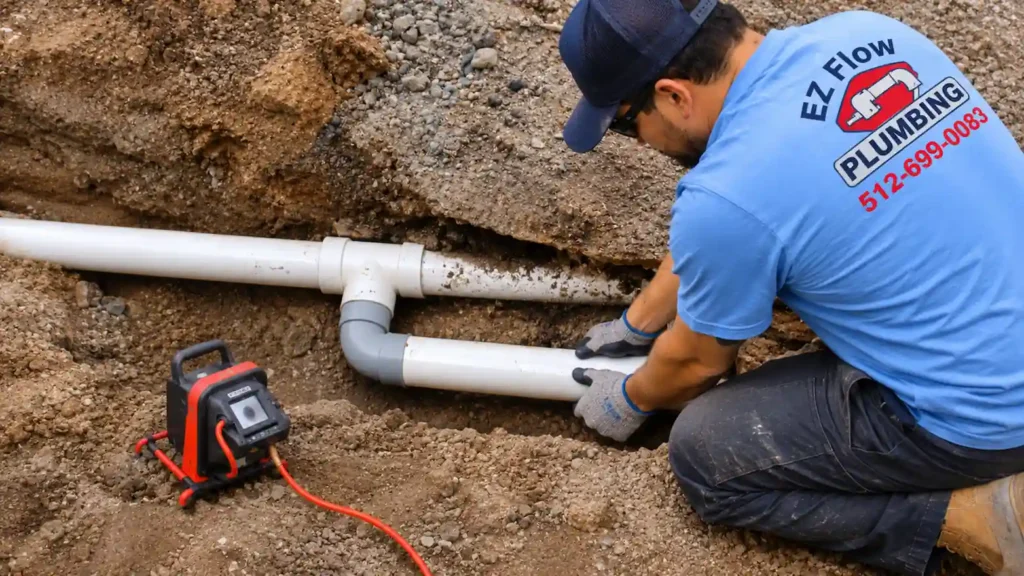

Storm drain service is the cleaning, inspection and repair of the drains that carry rainwater away from the property. Unlike the pipes inside a home, these lines send water straight to creeks and lakes without treatment, as Round Rock’s stormwater guidance explains for Central Texas homeowners.
When those drains become blocked the symptoms are of flooding rather than plumbing. You’ve got water sitting up against the foundation, a parking lot will hold a puddle for days, a downspout will back up onto the patio. It’s water coming from the sky rather than a fixture so many owners will simply put it off for a very long time before they’ll actually call anyone.
At EZ Flow Plumbing Texas, we do inspections and clean private storm drain service for homes and commercial properties throughout Austin, Pflugerville, Round Rock, Georgetown and Hutto. We know how clay soil, heavy rains and leaf/mulch load up the lines and we’ll tell you exactly what we find prior to making any recommendations.
Storm Drain Service: The Short Definition
A storm drain is simply any inlet, pipe or channel designed to take the rainwater off a property and prevent flooding. Storm drain service is all about the maintenance and repair of the drain to keep it clear and working properly.
This would include things such as camera inspections, clearing of debris, hydro jetting and repair of any damaged sections. The key thing is flow, slope and the condition of the system as a whole as a drain line that is only partly clear may well fail when the volume of water during a heavy rain event puts it under pressure.
Private storm drainage systems can consist of yard and area drains, downspout and gutter tie-in lines, parking lot inlets, catch basins, driveway trench drains and underground discharge pipes which carry the water to a street, ditch or creek. It doesn’t matter who the property is owned by, the same fundamental principle applies; rainwater needs to have a clear and properly sloped route off the property.
Storm Drains Versus Sanitary Sewers
A storm drain takes rainwater and a sanitary sewer takes the wastewater from the toilets, sinks and showers which then gets taken to a treatment plant. If you mix them up you get the wrong call. A storm drain service company will clear and inspect the storm drain (rainwater) system, a main sewer problem requires a different type of diagnosis. Rainwater is not treated before it goes into the creeks so only rainwater should be in the system.
| Feature | Storm drain | Sanitary sewer |
| Carries | Rainwater runoff | Household wastewater |
| Destination | Nearby creek or lake, untreated | Treatment plant |
| Typical problem | Yard flooding, ponding | Indoor backups, odors |
Some of the older cities do run combined systems (merge the two), but most of the Central Texas properties have separate lines. That’s why a clog in one won’t normally affect the other and why a backup inside the house is indicative of the sanitary side.
Where Private Storm Drains Fail in Austin
Austin’s clay, the heavy rain we get and the thick tree cover means there’s a constant load on the private drains. Leaves, mulch and silt wash into the inlets and accumulate in the flat bits of pipe. Roots get in at the joints and shifting soil can leave sags that hold water. Knowing why the storm drain service call is coming in is the key to being able to select the correct fix rather than just doing the same cleaning every season.
| Cause | What happens | Typical fix |
| Debris and mulch | Inlet or pipe fills and slows | Clearing and jetting |
| Root intrusion | Roots enter joints and catch debris | Root cutting, joint repair |
| Sagging pipe | Water holds in low sections | Section repair or replacement |
| Crushed or collapsed pipe | Flow stops entirely | Excavation and replacement |
Ownership also comes into it. In Austin, drains on private property (e.g. inlets in an apartment complex, inlets on a commercial lot) are generally the responsibility of the property owner, with the City maintaining the public inlets and channels in the right of way. If it’s the owner’s responsibility then the plumber you call is the quickest way to get it sorted.
Signs You Need Storm Drain Service
A storm drain problem shows up as water that stays where it should leave. Watch for these signs, and schedule storm drain service when more than one appears:
- Standing water near a foundation, patio, or driveway after rain
- Downspouts that overflow or discharge slowly
- Gurgling or bubbling at yard drain grates
- Soil erosion or sinkholes along a drain path
- Mud, mulch, or debris packed into an inlet
- Water that takes more than a day to clear after a storm
Not every symptom is a drain problem. Poor grading, failed gutters, or a high water table can cause similar pooling, which is why inspection comes before any repair.
Pooling water that touches a foundation deserves prompt attention because repeated saturation can stress slabs and footings.
What a Storm Drain Service Visit Includes
A storm drain service job normally starts off by locating the drainage system and establishing where the line actually discharges. The first thing you do is clear out any visible surface debris and if you have access you’ll run a camera down the line to check the condition of the interior. The camera will tell you all sorts of things about the line; how deep it is, what the gradient is, any cracks, any damaged sections, any build up of debris, any root intrusion etc.
The findings should be recorded so the property owner can go away and look at the same conditions that the plumber has identified. Depending on what the inspection reveals the next step could be to clean the line, repair a particular section that’s damaged or in some cases replace part of the system if it has failed.
Following the visit it would be useful to get a copy of the inspection video, confirmation of where the drain discharges, photos of any visible damage and a clear written estimate if any work is recommended.
How Often to Schedule Maintenance
Maintenance frequency is dictated by the debris load and the type of property. A storm drain service schedule is best implemented prior to the storm season rather than after the first flood.
| Property | Suggested check | Why |
| Single-family home with mature trees | Once a year, before spring storms | Leaf and mulch load |
| Home on a slope or with drainage issues | Twice a year | Silt and erosion |
| Apartment complex or HOA | Twice a year | Many inlets, heavy debris |
| Commercial parking lot | Twice a year plus after major storms | Trash and sediment |
These are planning ranges rather than rules. A camera inspection following a problem will give you a much better schedule for your particular lines.
Stormwater Rules and Why Only Rain Belongs in the Drain
Texas cities and counties operate their public drains under MS4 permits in Texas, which exist to reduce pollution reaching waterways. For property owners, the practical rule is simple: only rain belongs in the drain. Car wash runoff, grease, paint, oil, and lawn chemicals do not. A storm drain service provider can flag illegal connections, such as a sump or sanitary line tied into the wrong system, before they become a code problem.
Commercial properties are under more scrutiny. Parking lots, loading bays and construction sites all gather oil, sediment and litter and a blocked inlet will just send that load straight into a creek during a storm. Keeping inlets clear and properly documented is a good way to protect your property and the properties downstream.
How to Choose a Provider for Drain Work
The right provider for storm drain service work is one that is properly licensed, has the right equipment, can provide the necessary documentation and can clearly explain the options available to you. A good provider will be able to tell you where the drain line runs, what is stopping the flow, what the condition of the system is and will be able to explain the cost and purpose of any proposed repair.
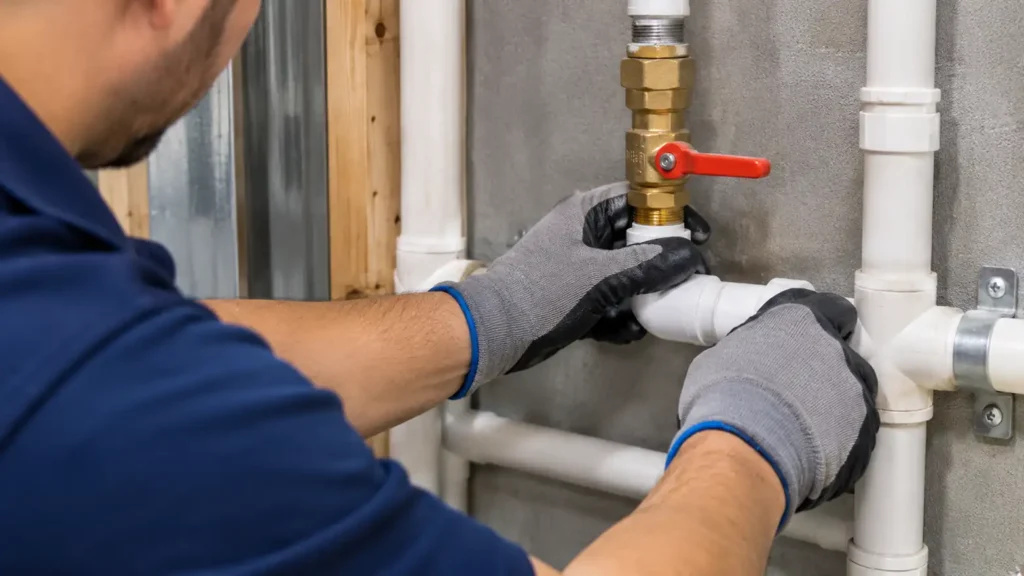
In Texas this is the sort of thing that a licensed plumber is best placed to do rather than a general handyman. They should have the camera inspection gear and be happy to provide the footage to the customer to keep. They should have both hydro jetting and cable available as different types of blockages will require different types of cleaning. The written findings should clearly separate out the cleaning, the repair and the replacement. That way the owner of the property knows exactly what is required.
Local experience is of particular value in the Austin area. A plumber who knows the local clay, the tree root intrusion, the storm patterns and the commercial drainage is going to be able to diagnose a problem far more effectively than a national dispatch service who has very little knowledge of the area. Local crews are also more likely to be familiar with the city requirements and to be on the hook for the work once it’s completed.
At EZ Flow Plumbing Texas, our drain cleaning services pair camera inspection with jetting and cleaning, so you see the cause before you approve a fix. Property managers also benefit from written reports, because they document the condition of each drain for owners and insurers.
What to Do Before the Next Big Rain
Prep is normally a lot cheaper than an emergency. Before the next storm forecast, clear the leaves and mulch from every inlet by hand, check that all your downspouts discharge well away from the foundation and walk the property looking for any low spots. If water is already sitting there, get a storm drain service in to look at it now rather than wait for the next rain to prove the problem.
Document what you find. Photos of the pooling, the grate conditions and the discharge points will give the plumber a much quicker start and provide the property manager with a record for the owners and insurers.
A clear drain is one of the cheapest forms of flood protection that you can have on a property. Knowing what your system has, who maintains it and how it behaves in the rain turns a surprise into a scheduled visit.
Our team holds Texas license RMP 39227 and serves homes and businesses across Austin and Central Texas with inspections that show what we see. If your drains are slow or you want a baseline, contact EZ Flow Plumbing Texas and we will recommend the right next step.