
Learning how to prevent slab leaks is first knowing what it is, a malfunction of water supply or drainage lines underneath the house’s concrete foundation where the pipes can neither be seen nor accessed easily. In the areas of Austin and Central Texas, these malfunctions tend to happen due to a common factor, which is the combination of pressure, mineral-laden water, and clay soil movements; and the USGS explanation of water hardness shows why mineral content matters for buried metal pipe.
It is possible to prevent such incidents because slab leaks occur slowly. Pipes seldom malfunction out of nowhere since pressure overload, minerals corroding copper pipes, and movement of soil on every drought and rainy cycle are sure signs prior to water surfacing.
We at EZ Flow Plumbing Texas assist homeowners in Austin, Pflugerville, Round Rock, Georgetown, and Hutto spot the signs early enough so that their pipes don’t cause concrete destruction and flooding.
How to Prevent Slab Leaks: The Short Definition
Slab leak prevention is the method used to decrease the stress applied to underground pipes and to identify any potential problems before a breach occurs. This process cannot remove the risk entirely, and no professional plumber claims that there is zero risk for a slab leak to occur. Slab leak prevention can only aim to reduce the likelihood and make detection quicker.
Three levers do most of the work:
- Control the forces on the pipe: water pressure and thermal expansion
- Control the environment around the pipe: water chemistry and soil moisture
- Control the time to detection: meter checks and early inspections
What Causes Slab Leaks in Austin Homes
Slab leaks are caused by corrosion, abrasion, pressure stress, and soil movement acting on pipes embedded in or under concrete. Each cause points to a different habit.
| Cause | How it damages the pipe | Prevention habit |
| High water pressure | Constant stress on joints and fittings | Test pressure and adjust or replace the regulator |
| Hard water and pitting | Minerals and chemistry erode copper from the inside | Know your water and plan for softening or replacement |
| Soil movement | Clay swells and shrinks, shifting the slab and bending pipe | Keep soil moisture steady and drainage clear |
| Abrasion | Pipe rubs against concrete or gravel as it expands and contracts | Pressure control and an expansion tank where needed |
| Age | Materials reach the end of their service life | Condition assessment before failure |
Because each cause maps to a single habit, how to prevent slab leaks is better treated as a short list of routines than as one big fix.
Check Water Pressure Before Anything Else
Water pressure is the pushing force used to drive water through pipes and is calculated in pounds per square inch (psi). Most of the plumbers try to maintain the range between 50-70 psi in a home setting. In addition, more than 80 psi is seen as being too much for a pipe’s lifespan.
An easy to use gauge attached to an outdoor hose bib displays the figure within one minute. If the pressure is too much, then a pressure reducing valve may be regulated or replaced by a plumber. The closed system homes need thermal expansion tanks because they absorb the pressure fluctuations that take place in the water heater cycle. Out of all the things to do to prevent slab leaks, regulating water pressure is the cheapest but often overlooked one.
Hard Water, Pitting, and Pipe Material
Pitting corrosion refers to the gradual wearing away of small areas of the inner surfaces of the metal pipe and results in the formation of a pinhole leak. The water in Austin is described as hard, and this will accelerate the process of pitting within copper pipes, particularly in those areas where no softening systems have ever been used.
The material of the pipes alters the situation. The copper pipes which were installed between the 1960s and the 1990s fall under the age category where pinholes form. The galvanized steel corrodes from the inside and reduces the flow. The PEX pipes do not experience pitting or scaling. Water chemistry is a quiet part of how to prevent slab leaks, because the most dangerous corrosion is the kind nobody can see.
Soil Movement and Foundation Care
It is the slow corrosion of small areas inside a metal pipe until a pinhole leak is formed. The city of Austin water is considered to be hard water and the minerals present therein could contribute in accelerating pitting in copper pipes in particular in houses that do not have any water softening system.
The piping material makes a big difference. The period when copper piping was installed ranges between 1960 to 1990 and it falls in the period when pinhole leaks become frequent. Steel galvanized pipes suffer from internal corrosion and decrease in flow while PEX does not suffer from pitting or scaling. Managing the ground is how to prevent slab leaks without touching a single pipe.
Our leaking pipe services at EZ Flow Plumbing Texas include tracing the leak without opening more of the home than necessary. Monthly meter checks are the most practical answer to how to prevent slab leaks from becoming slab damage.
Water Meter Checks and Leak Monitoring
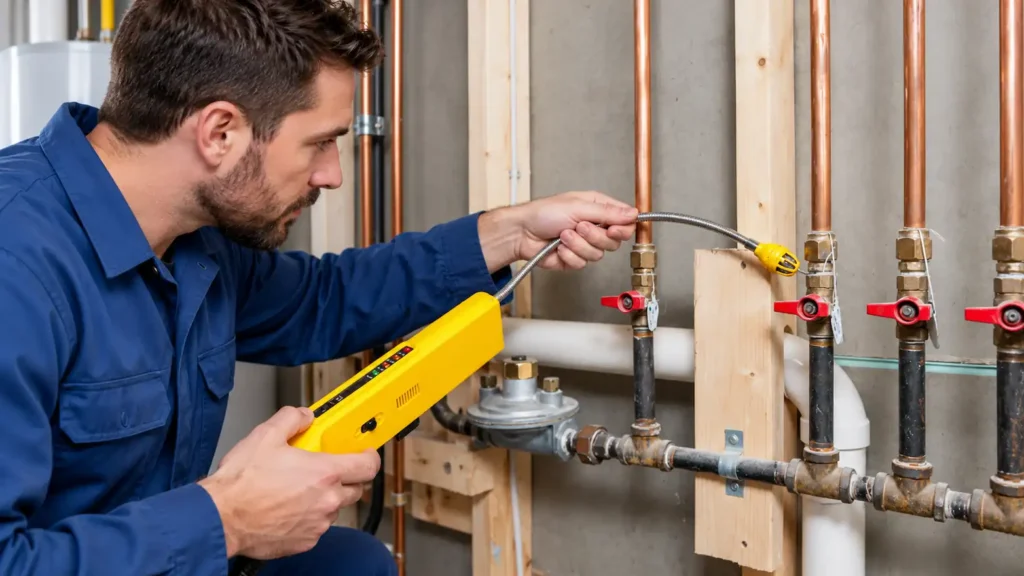
The meter test is an easy procedure to tell you if water is flowing in the pipes when there is no activity. All appliances should be turned off, and the flow detector of the meter checked for movement. Movement of this needle means there is some water leaking somewhere.
Utility companies use the same concept but on a large scale, as the water loss and leak detection guidance from the Texas Water Development Board explains. At home, check the meter monthly and compare your bill against normal use.
Seasonal Prevention Checklist for Central Texas
A seasonal checklist turns good intentions into routine. Here is a version that fits Austin’s weather:
- Spring: test water pressure, inspect visible supply lines and shutoff valves, check for damp spots along walls and slab edges
- Summer: water the foundation perimeter evenly during droughts, watch the meter for unexplained movement
- Fall: clear gutters, confirm drainage slopes away from the house, review the water heater and expansion tank
- Winter: insulate exposed pipes, know where your main shutoff is, drip faucets during hard freezes
Treat this list as a working version of how to prevent slab leaks across the whole year.
How to Prevent Slab Leaks by Home Age
Home age determines which risks come first. A house built in 1965 and one built in 2005 do not share the same pipe, so they do not share the same priorities.
| Home age | Typical supply pipe | Top priority |
| Before 1975 | Galvanized steel or early copper | Condition assessment and repipe planning |
| 1975 to 1995 | Copper, some polybutylene | Pitting inspection and pressure control |
| After 1995 | Copper or PEX | Pressure, expansion tank, and monitoring |
Though age affects the order of things, prevention of slab leaks will always involve checking the moisture and pressure in the area. While hiring a plumber for inspection, look for one who is licensed, knows about leak detection, issues a detailed findings report, and explains the repair process. We are located in Central Texas and present what we find, which gives you the actual state of things when making a decision.
Early Warning Signs That Prevention Is No Longer Enough
The early warning sign is any change in the usage, noise, or temperature of water, which indicates that there is a leak under the slab. This means that it is high time to contact the plumber since:
- A higher water bill with no change in habits
- The sound of running water when everything is off
- Warm or hot spots on the floor
- Damp carpet, lifting flooring, or a musty smell
- New cracks in walls or flooring near plumbing runs
- Lower pressure throughout the house
Prevention and detection work together, and how to prevent slab leaks includes knowing when to stop prevention and request an assessment.
How to Prevent Slab Leaks Starts With a Baseline
It’s easy to prevent anything if you know the situation of your own system. A baseline assessment includes details such as what kind of pipes do you have, the water pressure, the status of the accessible line and whether there is any sign of moisture present.
This baseline will be the best starting point for how to prevent slab leaks over the long term. It also makes repair decisions clearer, because you can see whether a problem is isolated or part of a pattern across the system.
Our team holds Texas license RMP 39227, and we are glad to review your system with you. If you want a straightforward look at your pipes, pressure, and meter behavior, contact EZ Flow Plumbing Texas and we will help you decide what, if anything, needs attention.