How long does a gas leak take to fix? A simple connector or valve repair can take a few hours, while a hidden or buried line can take a day or more once testing and inspection are included. The timeline depends on where the leak is, how easy it is to reach, and whether gas pressure test requirements apply before service can return.
When there’s no gas, the situation shifts from technical to personal. No hot water, no heat, no stove, and occasionally tenants who need answers. It is helpful to understand what happens at every step along the way, so that you can be prepared to ask the right questions.
EZ Flow Plumbing Texas performs gas leak repairs for homeowners and property managers in the areas of Austin, Pflugerville, Round Rock, Georgetown, and Hutto. We offer you a realistic timeframe once we have determined the cause, and not before.
How Long Does a Gas Leak Take to Fix? The Short Answer
Time required for repairing a gas leak is the total time taken to reach a point where the system is safe after the first visit, which goes beyond just the time required for the repair work. How much time does it take to repair a gas leak? As an estimated time span, it takes a day or two for most repairs to be completed. Emergencies take precedence over the repair process. The actual repair process starts once the location is deemed to be safe. There are four determinants of time:
- Where the leak is located
- How much of the piping must be opened or replaced
- Testing and inspection requirements
- When the utility can restore service
The Timeline From Smell to Safe Service
Most gas leak jobs follow the same stages, and each has its own clock. Homeowners asking how long does a gas leak take to fix often count only the repair stage, but the full path looks like this:
| Stage | What happens | Typical time |
| Emergency response | Leave, call 911 and the utility, area cleared | Minutes to a few hours |
| Scheduling | Plumber books the visit after the area is safe | Same day to a few days |
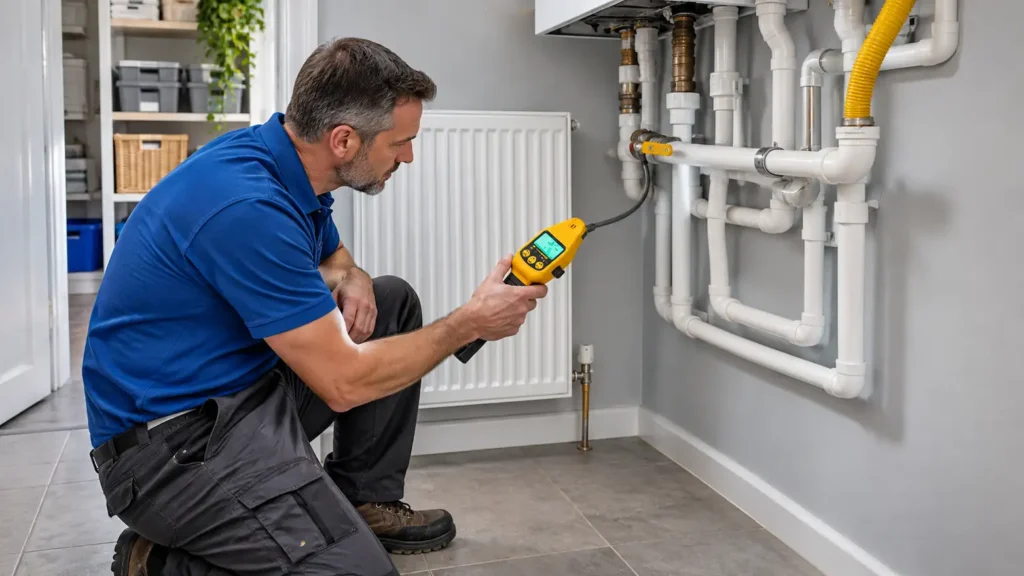
| Detection | Source located with electronic tools | 30 minutes to 2 hours |
| Repair | Fitting, connector, or pipe section fixed | 1 hour to a day or more |
| Testing | Pressure test and leak check | 30 minutes to a few hours |
| Inspection and restoration | Permit inspection if required, utility restores service | Same day to several days |
These ranges are general estimates for planning. Your plumber should give you a specific window once the source and scope are known.
How Long Does a Gas Leak Take to Fix by Repair Type?
The repair type is the biggest driver of the clock. The honest answer to how long does a gas leak take to fix changes with the part that failed, as the table shows.
| Repair type | Typical work time | Notes |
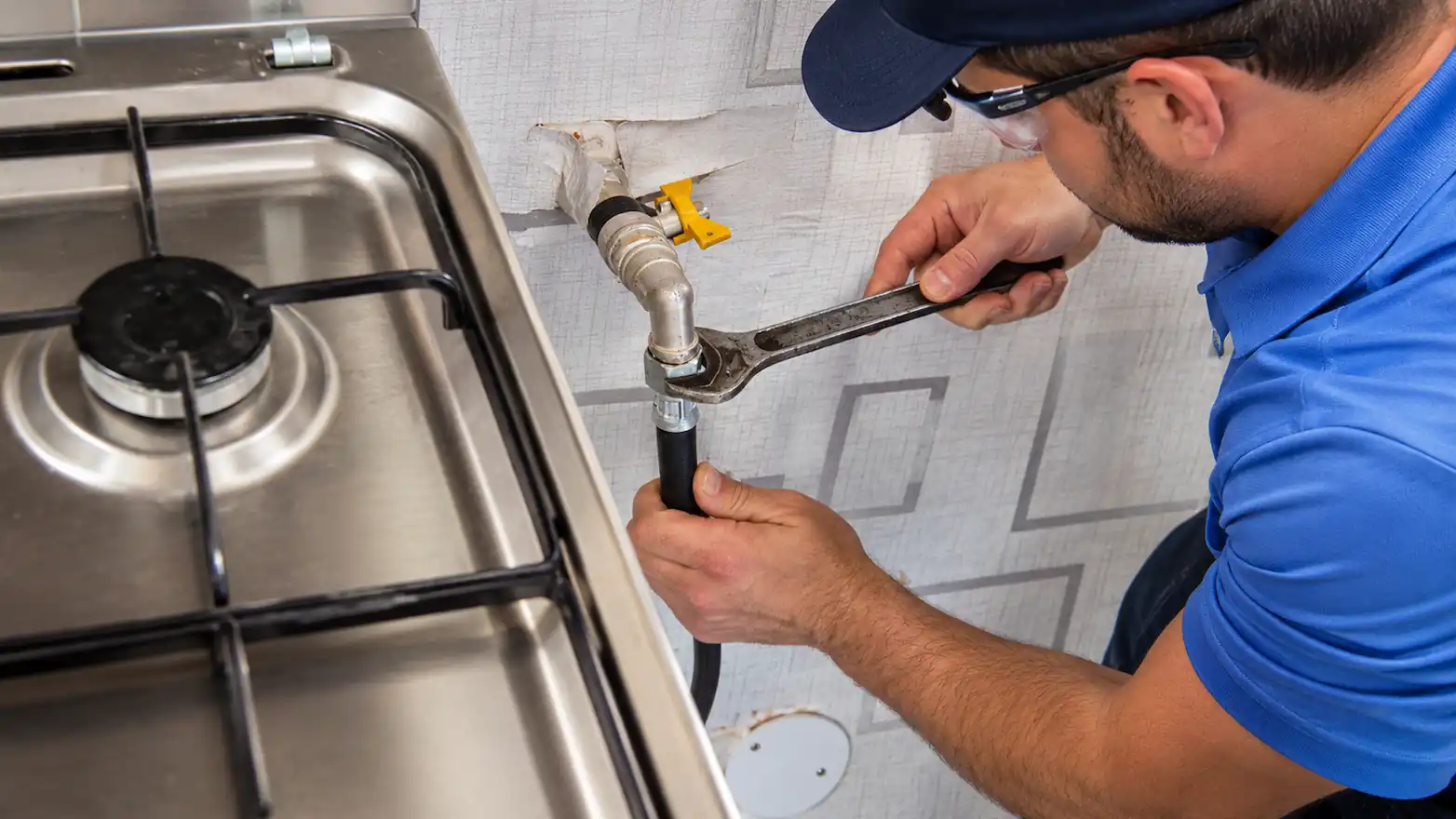
| Flexible appliance connector | About 30 minutes to 1 hour | Includes testing at the appliance |
| Shutoff valve replacement | About 1 to 2 hours | May need the line isolated |
| Fitting or union repair | About 1 to 3 hours | Depends on access |
| Short section of exposed pipe | About 2 to 5 hours | Includes threading or fitting work and testing |
| Concealed pipe in walls or ceilings | Half a day to 2 days | Opening and patching add time |
| Buried or slab piping | One to several days | Excavation, permits, inspection |
Work time is not the same as total time. Add scheduling, testing, inspection, and utility restoration for the full picture.
What Makes a Repair Faster or Slower
Several variables decide whether a job lands at the short or long end of the range. Anyone who wonders how long does a gas leak take to fix should check these first:
Faster when:
- Exposed piping with clear access
- A single failed connector or valve
- Parts on hand for common fittings
- Clear access to the meter and appliances
Slower when:
- Leaks hidden behind finished walls or under slabs
- Corroded or mixed piping materials
- Multiple leak points along one run
- Permit and inspection scheduling
- Utility restoration queues
A good plumber will tell you early if the scope grows. Finding a second leak can happen on aging piping, and a clear update beats a surprise on the final invoice.
Concealed, Buried, and Slab Gas Lines
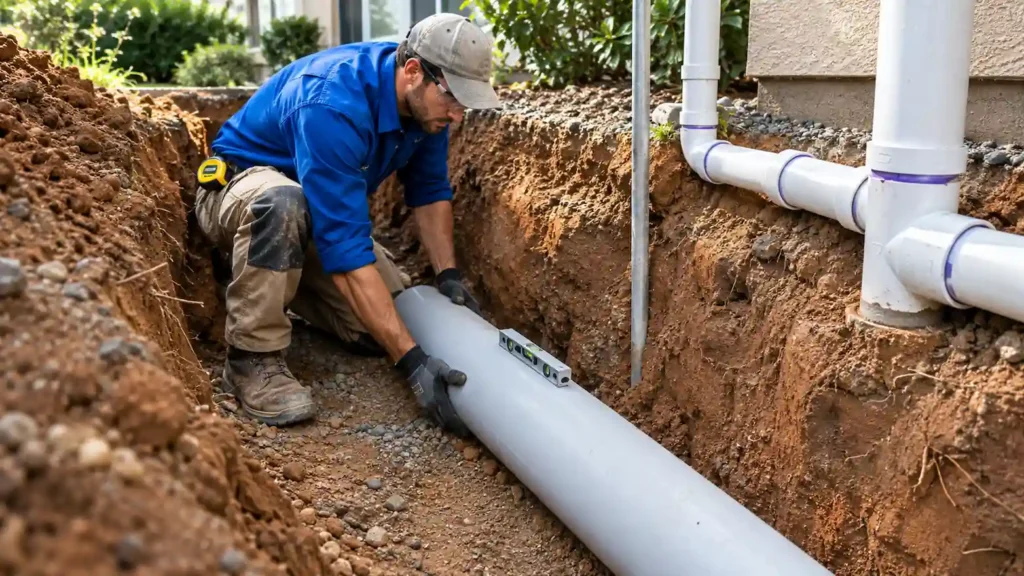
Hidden piping is where timelines stretch. When a leak is behind a wall or under concrete, the answer to “how long does a gas leak take to fix” depends on how much must be opened to reach it. Locating the leak precisely keeps that opening small, which is why detection comes before any demolition.
Slab and buried leaks often involve a choice between repairing the damaged section and rerouting the line through walls or the attic. Rerouting can shorten disruption to the floor but adds piping and inspection time. A plumber should explain both paths before work starts.
Testing, Inspection, and Restoring Service
A repair is not finished until the system is tested and service is restored. Customers who ask how long does a gas leak take to fix are often surprised that this final stage can take as long as the repair. A pressure test confirms the piping holds, a leak check at joints confirms the fix, and some cities require an inspection before gas returns.
Thorough documentation of test results is part of good practice, as these fuel gas inspection protocols show for the building safety field. Do not ask a plumber to skip the test to save time. The test is the proof that the repair works.
Utilities may restore service at the meter once piping passes, and appliance pilots or relighting may follow. Plan for a gap between a finished repair and hot water or heat coming back.
Austin Homes and Local Timing Factors
Local conditions affect the answer when someone asks how long does a gas leak take to fix in Austin. Homes from the 1960s through the 1990s can have older black iron piping with corroded joints, so a single repair sometimes reveals a second weak point nearby. Slab foundations make hidden lines harder to reach, and busy storm or winter weeks can lengthen scheduling. Austin’s expansive clay can also shift slabs and stress buried lines over time.
| Home type | Common timing factor |
| Older home with black iron piping | Extra weak points found during repair |
| Slab-on-grade home | Hidden lines need precise locating |
| Newer home with CSST | Faster access, but bonding and connector checks matter |
How Long Does a Gas Leak Take to Fix in a Rental or Multi-Unit Property?
Multi-unit properties add coordination. Property managers asking how long does a gas leak take to fix across several units should plan for tenant notice, access, and shutoff scope, because isolating one unit’s gas may or may not require shutting down the whole building.
Property managers can speed things up by:
- Notifying tenants and arranging access early
- Keeping a record of appliances and shutoff valve locations
- Designating one contact for the plumber and utility
- Planning temporary heat or hot water if needed
Documented findings also protect owners, because a written record shows what was found, what was repaired, and when service returned.
How to Choose a Plumber for a Fast, Safe Repair
Speed should never come at the expense of safety when dealing with a gas leak. If you ask a company how long does a gas leak take to fix, a trustworthy provider should be able to give you a realistic time range, explain which factors can affect that timeline, and make it clear that the system will be properly tested before gas service is restored.
It is also important to look beyond the estimated repair time. A qualified provider should hold a current Texas plumbing license and be able to identify the responsible licensed professional overseeing the work. The company should have the right equipment for electronic leak detection and pressure testing, along with a clear written scope that explains what will be inspected, repaired, and verified.
A reliable plumber should also be willing to explain which parts of the gas system fall under the homeowner’s responsibility and which may need to be handled by the utility company. Local experience matters as well, particularly in Austin, where familiarity with common home layouts, gas appliances, and local service requirements can make the diagnosis and repair process more efficient.
At EZ Flow Plumbing Texas, our gas leak detection services locate the source first, so the repair window we give you is based on what we found, not on a guess. A faster quote is not a faster fix if the repair skips testing. A local plumber who documents the work and returns when something is not right saves time in the end.
How to Prepare So the Repair Goes Faster
Preparation can trim hours from the answer to how long does a gas leak take to fix. Once the area is safe and the utility has been notified, a few steps help the plumber start quickly:
- Note when you first noticed the odor, sound, or symptom
- List the appliances that use gas and any recent changes
- Clear access to the meter, appliances, and shutoff valves
- Gather any permit or inspection paperwork from earlier work
- Ask the plumber for a written scope and time window
Plan for the Whole Timeline, Not Just the Repair
The best answer to the timeline question is a range tied to a diagnosis. That means hours for a simple fix, days for a hidden line, plus time for testing, inspection, and restored service. Our team holds Texas license RMP 39227 and works across Austin and Central Texas, and we explain each finding in plain terms. If you want a clear window for your own repair, contact EZ Flow Plumbing Texas and we will lay out the timeline.