Most people never think about water heater maintenance until hot water stops coming out, and by then the conversation has already shifted toward water heater repair or replacement rather than prevention. Flushing sediment, checking the anode rod, testing the pressure relief valve, and confirming the thermostat setting are the routine tasks that keep a unit running well and push that repair conversation years further down the road.
Austin makes this especially relevant. Hard water accelerates sediment buildup and corrosion considerably, so a unit that never gets flushed or inspected tends to run into trouble sooner here than it would in areas with gentler water running through the pipes.
At EZ Flow Plumbing, keeping the water heater maintenance in shape is one of the most affordable things a person who owns a property can do for a unit that is still working properly. Before suggesting anything complicated, we need to find out if simple cleaning and checking have ever been done, because that history affects what can reasonably be expected in the future.
What A Real Visit Actually Covers
A complete water heater maintenance visit flushes the tank to remove dirt and buildup, checks the anode rod to see if it is worn, tests the temperature and pressure relief valve, and makes sure the thermostat is in place, for the house that actually uses the unit.
When you go to check your water heater, you need to do more than the basic things. You also need to check the fittings and the water heater tank for leaks. If you have a gas water heater, you should look at the venting to make sure it is working properly. You should also check the insulation on the water heater, especially if it is one that is in your garage or a room that does not have air conditioning or heating.
This is because the temperature can get very hot or very cold in these rooms, and that can be hard on your water heater.
None of this takes long individually, but ignoring all of it for years adds up fast. Water heater maintenance kept up consistently tends to catch small problems while they’re still cheap fixes rather than letting them snowball into a middle-of-the-night emergency.
Sediment: The Silent Efficiency Killer
Minerals in the water settle at the bottom of a tank over time, and Austin’s harder water accelerates that process well beyond what happens in areas with gentler supply.
Left unaddressed, that layer insulates the heating element or burner from the water it’s meant to heat, forcing the unit to work considerably harder and burn through more energy than it should. It’s also usually the cause behind the rumbling or popping sounds homeowners notice as a unit gets older.
Flushing clears that buildup before it thickens into a genuine problem, and sticking to a routine schedule tends to stretch a unit’s working life noticeably compared to one that’s never been flushed at all.
The Anode Rod Nobody Thinks About
Tucked inside a conventional tank, the anode rod exists purely to corrode instead of the tank itself, pulling corrosive elements in the water toward itself rather than the steel walls surrounding it.
Once that rod wears down enough, the protection basically disappears, and the tank becomes the next target for corrosion from the inside. This single overlooked part explains why plenty of otherwise fine units start failing years ahead of schedule.
Checking the rod periodically and swapping it out once it’s significantly worn costs a fraction of what a full water heater replacement runs once the tank itself starts rusting through. Learn more about how we approach this on our water heater repair page.
The Valve That Exists For One Reason
The temperature and pressure relief valve has exactly one job: releasing pressure the moment it climbs past a safe threshold inside the tank, which makes it arguably the most important safety component on the whole unit.
Testing it periodically confirms it’ll actually do that job when needed, since a valve that’s rusted shut or otherwise stuck completely defeats the point of having installed one in the first place.
Any water heater maintenance visit worth its cost confirms this valve still works, especially on older units where nobody’s touched it since the day the unit went in.
Tankless Units Play By Different Rules
A tankless water heater maintenance visit skips the sediment problem entirely, but mineral scale still finds its way into the heat exchanger over time, particularly given Austin’s harder water supply.
Manufacturers usually suggest descaling a tankless water heater once every year. They recommend using vinegar or a solution that the manufacturer approves. This helps remove scale from inside the system. It is important to do this before the flow becomes blocked.
If you do not take care of your water heater maintenance, it will not suddenly stop working like a regular water heater might. Over time, your tankless water heater will not work as well as it used to. You will start to see error codes on the display that say there is a problem with the water flow.
This happens because the tankless water heater is getting blocked and it is not able to work. The error codes will appear on the display without you knowing something is wrong with your tankless water heater beforehand. Your tankless water heater will just not work well, and you will see these error codes.
Where Homeowners Should Draw The Line
Confirming the thermostat sits around 120 degrees is something almost anyone can check safely without special tools. The U.S. Department of Energy’s guidance points to this setting for most households, balancing energy savings against scald risk and mineral buildup inside the tank.
Flushing sediment and eyeballing the anode rod are tasks plenty of homeowners handle themselves by following manufacturer instructions, though anyone uneasy around shutoff valves or a stubborn rod should just call someone rather than force it.
Gas connections, venting, and the pressure relief valve’s actual function belong with a licensed professional rather than a DIY attempt, since mistakes there carry real safety stakes well beyond a simple inconvenience.
The Warranty Fine Print Nobody Reads
Plenty of manufacturer warranties include language tied directly to documented maintenance, particularly around anode rod condition, and neglecting that upkeep can actually affect coverage if a claim ever gets filed.
This catches property owners off guard constantly, people who assumed a warranty covered any failure regardless of upkeep, only to discover during an actual claim that maintenance history mattered a great deal to the outcome.
Keeping even simple records of water heater maintenance, a date and a note of what got done, protects a property owner if a warranty question ever surfaces years down the line.
Commercial Properties Need Their Own Rhythm When It Comes to Maintenance.
Restaurants, offices, and multi-tenant buildings use a lot of water every day. This is different from what a household uses. So the water heater needs to be checked often.
A commercial kitchen uses a lot of water. It can use hundreds of gallons of water every day. This makes the sediment build up faster in the water heater. It also makes the anode rod wear out faster. This is different from what happens in a house. So a water heater that is checked once a year might not be enough for a kitchen. It might stop working if it is not checked more often.
Commercial water heaters like the ones in restaurants and offices need to be checked more often than the ones in houses. Scheduling water heater maintenance around actual usage volume, rather than defaulting to the same yearly rhythm everywhere, tends to protect commercial properties from the kind of unexpected downtime a residential owner might tolerate but a business genuinely can’t afford to absorb.
Picking Someone To Trust
| Factor | Why It Matters |
| Covers all core tasks | Sediment flushing, anode rod check, and valve testing together |
| Documents what was done | Useful for warranty claims and tracking unit history |
| Experience with tank and tankless | Maintenance needs differ significantly between types |
| Explains findings clearly | Tells you what’s fine versus what needs attention soon |
| Transparent about urgency | Honest about what can wait versus what shouldn’t |
Look for someone willing to explain what they actually found during a water heater maintenance visit rather than just confirming the job’s done. A team flagging a wearing anode rod or early sediment buildup is handing you time to plan instead of a surprise bill later.
Getting It Booked
Taking care of your water heater is something that people often forget to do. It is a good way to avoid having no hot water all of a sudden. Water heater maintenance helps your water heater last, and you do not have to replace it too soon. You do not want to have to deal with a water heater when you are not ready.
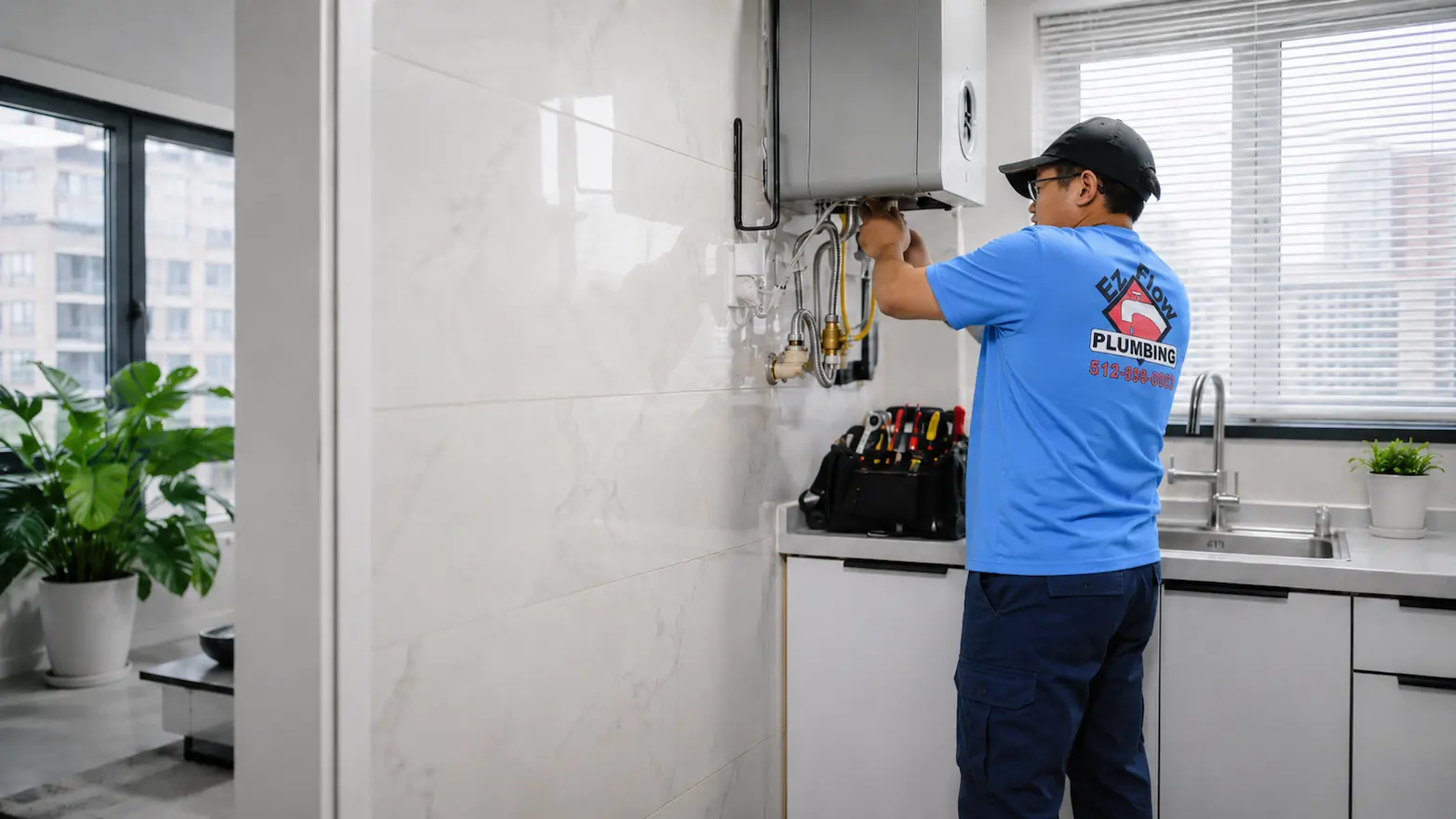
The things you have to do to take care of your water heater are not hard to do. You have to do them all the time. At EZ Flow Plumbing, we check your water heater to see what it needs when we come to visit. We look for things that might be going wrong with your water heater so we can fix them before they become a problem that needs a water heater repair.
Reach out through our contact page, and we’ll talk through what your unit actually needs before anything gets scheduled.