Gas water heater repair is not one thing. It is a process where we try to figure out what is wrong. We start with the problem, then we look at the system, and finally we find the part that is not working. If your gas water heater stopped making water all of a sudden, it could be because of a few different things. It could be a thermocouple, the pilot orifice could be clogged, or the gas valve could be broken, or there could be a lot of sediment built up that is stopping the burner from working.
Each of these problems has a solution, a different cost, and it affects how much longer the gas water heater will last.
People who own homes in Austin and Central Texas usually notice that something is wrong before they really understand what is going on. They might notice that the shower gets cold faster than it used to. The water is warm, but it never gets really hot. The gas water heater is making a noise that it did not make six months ago. These are all signs that something’s wrong, and being able to understand what they mean is what makes a good repair. If we do not understand the signs, the repair might not last long.
At Ez Flow Plumbing, we do this kind of diagnosis every day in homes in Pflugerville, Round Rock, Georgetown, Hutto, and Austin. Every gas water heater is different; every problem is different. The solution is rarely the same. That is why we always inspect the gas water heater before we recommend what to do, not after. We need to understand what is going on before we can run a gas water heater repair.
What the System Is Actually Doing When It Fails
A tank-style gas water heater keeps water at a temperature and turns on the burner when the temperature goes down. The process works because a few parts work one after another. The thermostat checks the water temperature. Tells the gas valve to open. Then the burner starts burning using a pilot light or an electronic spark. A safety part called a thermocouple makes sure there is a flame before letting gas continue to flow.
If any one of these parts stops working, the whole process stops. The gas valve stays shut because the thermocouple never sends the signal. The burner turns on. Can’t keep heating because dirt is covering the bottom of the tank. The pilot light. Then goes out because the tiny hole is partly blocked or the thermocouple is too old to read the little electricity it needs.
Knowing how this process works helps because it changes how you see the problem. “No hot water” is not a problem. It shows that something specific went wrong in the chain. Gas water heater repair done properly means following the chain and finding the problem instead of just changing parts without knowing why.
The Signals Most Homeowners Miss Before the Water Goes Cold
You need a gas water heater repair when it stops working. There are other signs that something is wrong with your water heater, and you should pay attention to these signs. If your water takes a long time to heat up or it is only warm instead of hot, that is a problem with your water heater. If the temperature of the water keeps changing while you are using your water heater, that is a sign too.
If your pilot light in your water heater keeps going out but you can easily relight it, that might not seem like a problem. If your pilot light in your water heater keeps going out or if it will not stay lit, that is a sign that the thermocouple in your water heater is getting old. The thermocouple in your water heater is a part to replace. If you do not fix your thermocouple in your water heater, it can cause big problems later on. If you do not replace the thermocouple in your water heater, it might not be able to make water at all.
You should also pay attention to any sounds when your water heater is running. If you hear a rumbling noise or a popping sound while the burner is on, that is likely caused by sediment that has collected at the bottom of the tank. The burner is not broken; it is simply having to work harder to heat the water through all the sediment. This can shorten the life of your water heater even if you fix the sediment problem. Gas water heater repair can help with this. You need to take care of the underlying problem, or it will just get worse.
Why Austin’s Hard Water Changes the Conversation
The water in Austin and Central Texas contains a lot of calcium and magnesium. These minerals are safe to drink. They do not work well inside a water heater. When the water becomes hot, the minerals leave the water. They fall to the bottom of the tank. Over years, this forms a layer at the bottom of the tank.
In some homes, people do not clean out their water heaters. They do not replace the anode rod. This makes the problem worse. The water heater does not heat the water well, so it has to work harder. This puts stress on the tank. If you have water, as we do in Central Texas, this happens even faster.
When someone comes to a gas water heater repair, they should always check the tank and the anode rod. This is not something; it is a necessary part of the job. In Central Texas, doing this can make your water heater last a lot longer. If you do not do it, your water heater might last 8 years. If you do it, your water heater can last 12 years.
Pilot Light and Ignition Problems: What Each One Points To
| Symptom | Likely Cause | Typical Resolution |
| Pilot will not light at all | Clogged pilot orifice or no gas supply | Clean orifice, verify gas valve and supply |
| Pilot lights but will not stay lit | Failed or weak thermocouple | Thermocouple replacement |
| Electronic ignition clicks but no flame | Dirty or misaligned igniter | Clean igniter, inspect ignition circuit |
| Pilot stays lit, but burner does not fire | Faulty gas valve or thermostat | Gas valve or thermostat inspection and replacement |
| Pilot flame is yellow or orange instead of blue | Combustion air issue or dirty burner | Burner cleaning and combustion inspection |
Each of these points to a different component, and each requires a different approach. None of them should be diagnosed by feel around an active gas system. A licensed plumber uses a multimeter to test thermocouple output in millivolts, checks gas pressure at the valve, and confirms that the combustion air supply is clear before drawing any conclusions.
Proper gas water heater repair on the ignition side starts with confirming what the pilot or ignition circuit is actually doing, not with swapping parts based on the most common failure.
The Anode Rod and What Happens When It’s Gone
The anode rod goes up through the tank and breaks down on its own so the steel parts do not. It is made of magnesium or aluminum. In normal situations, it works for between three and five years based on the way the water is and how much it is used. When it is all gone, the breakdown moves to the inside of the tank, and that change cannot be undone.
Most people who live in houses have never heard about the anode rod, which means most water heaters are working with one that is gone. The first sign is usually water from hot water taps that has a smell of sulfur or hot water that looks a little bit like metal. By the time these signs show up, the inside of the tank might already be breaking down.
If an anode rod inspection is part of a gas water heater repair visit, a plumber can tell you exactly where it stands. If the rod is gone and the tank interior is still intact, replacement of the rod gives the unit a meaningful extension of service life. If the tank is already compromised, that changes the entire repair vs. replacement calculation.
Repair or Replace: A Practical Framework
The gas water heater repair vs. replacement decision comes down to three factors: the age of the unit, the condition of the tank, and the nature of the failure. No single factor is decisive on its own.
| Criterion | Lean Toward Repair | Lean Toward Replacement |
| Unit age | Under 7 years | 10 years or older |
| Tank condition | No corrosion, no leaks | Rust at base, leaking from tank body |
| Failure type | Single component (thermocouple, pilot, thermostat) | Multiple failing parts, gas valve failure |
| Anode rod | Worn but tank intact | Depleted with internal corrosion signs |
| Sediment buildup | Moderate, flushable | Heavy, hardened, affecting tank lining |
| Gas water heater repair cost vs. replacement | Under 40% of new unit cost | Over 50% of new unit cost |
A unit under 7 years old with a failed thermocouple is a straightforward repair. A unit at 11 years with sediment buildup, a depleted anode rod, and a second thermocouple failure in two years is a unit asking to be replaced. The math there is not about the cost of the gas water heater repair itself but about how much service life remains after the fix.
What a Real Diagnostic Looks Like on-Site
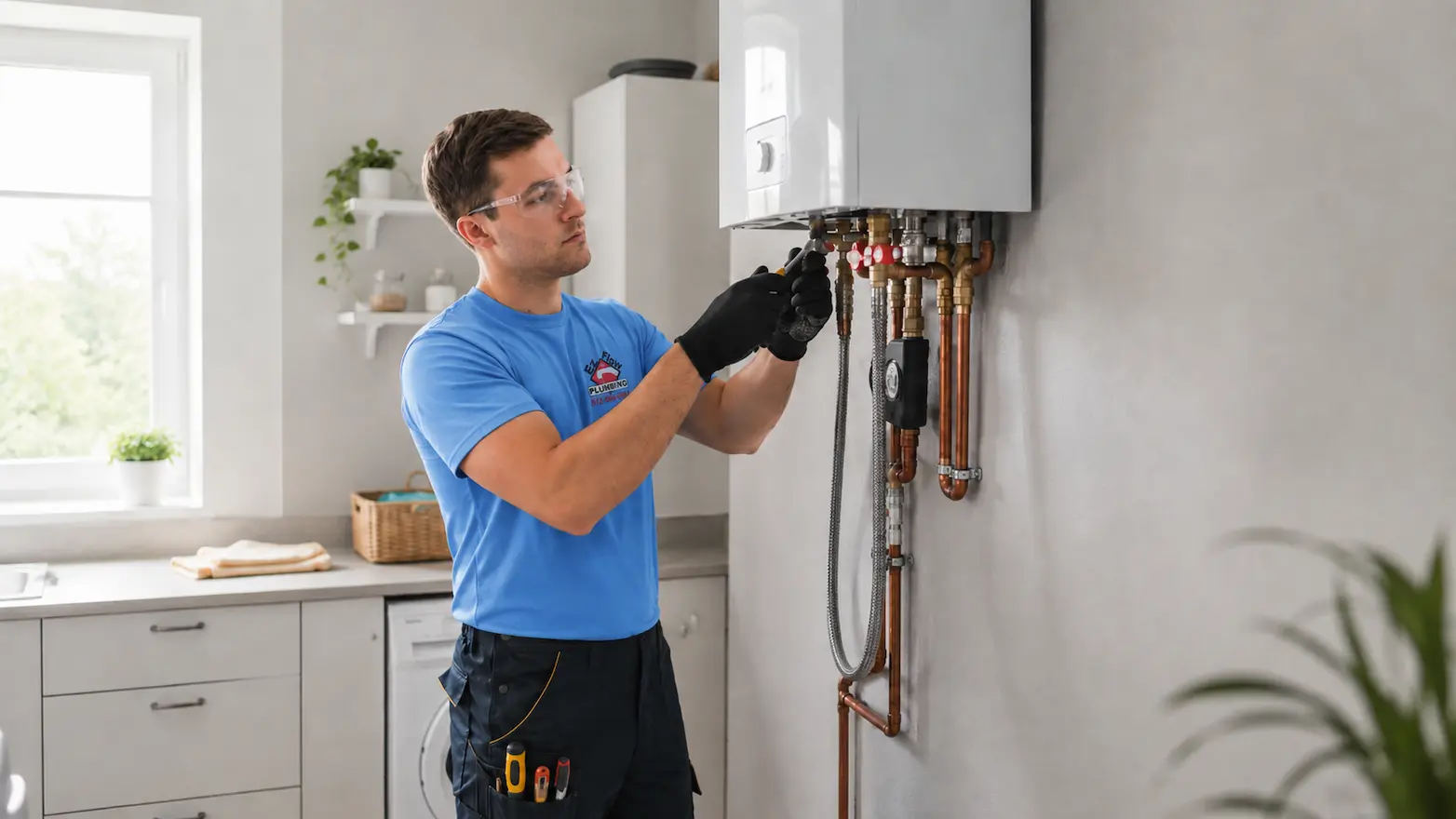
A gas water heater repair diagnostic does not start with the part most likely to fail. It starts with what the unit is doing, or not doing, and works systematically through the system. The inspection covers the pilot assembly or electronic ignition, thermocouple or thermopile output measured with a multimeter, gas valve operation, burner condition, thermostat calibration, pressure relief valve function, anode rod condition where accessible, and the base and fittings for any signs of corrosion or moisture.
The conversation with the homeowner is part of the diagnostic. How long has the unit been running this way? Has it been serviced before? Is the water in the area hard? Has there been any change in gas supply to the home? Those answers narrow the field before a single panel comes off the unit.
From that picture, a clear recommendation follows: this is the component that failed, this is what the repair involves, this is what the rest of the unit looks like, and this is what that means for its remaining life. That conversation is how a homeowner makes an informed decision rather than a pressured one. You can review the full scope of gas water heater repair and replacement services we provide across Austin and Central Texas to understand what each option involves before you commit to either direction.
Making the Right Call for Your Austin-Area Home
Gas water heater repair done well is not a quick swap. It is a system-level look at what failed, what the rest of the unit shows, and what the realistic remaining life looks like after the fix. That answer depends on the age of the equipment, the quality of the water it has been heating, whether it has ever been maintained, and the failure pattern over time.
Homeowners who get a clear diagnostic before any work begins make better decisions. They know whether they are paying for a repair that buys three more years or one that holds for another decade. They know whether the unit is worth keeping or whether the money is better applied toward a new installation. That clarity is what the inspection is for.
If your water heater is giving you signals you are not sure how to read, at EZ Flow Plumbing Texas, we are happy to walk through what you are seeing and give you an honest picture of what it likely means. Contact us to schedule your gas water heater repair assessment and get a straight answer before making any decisions.