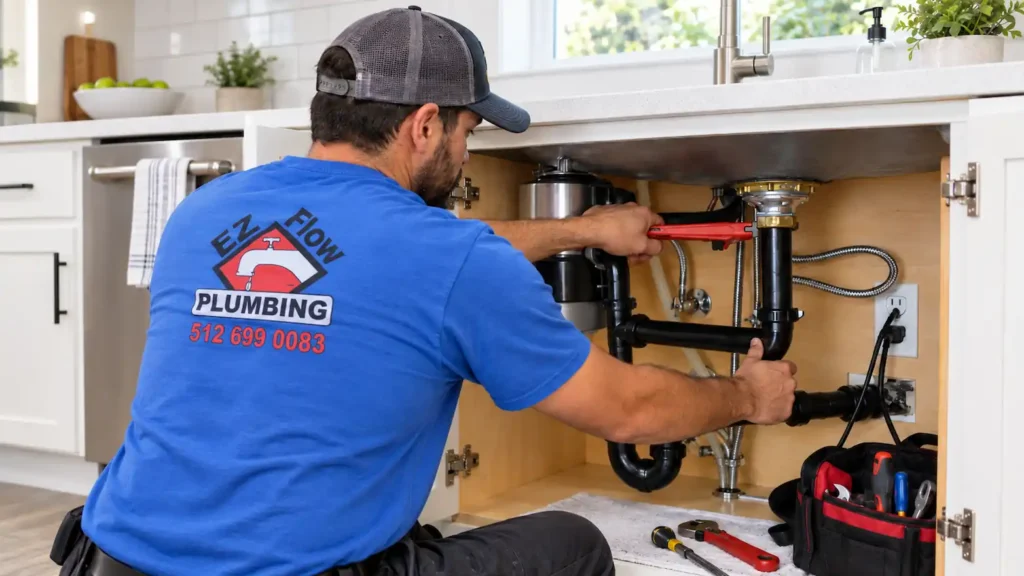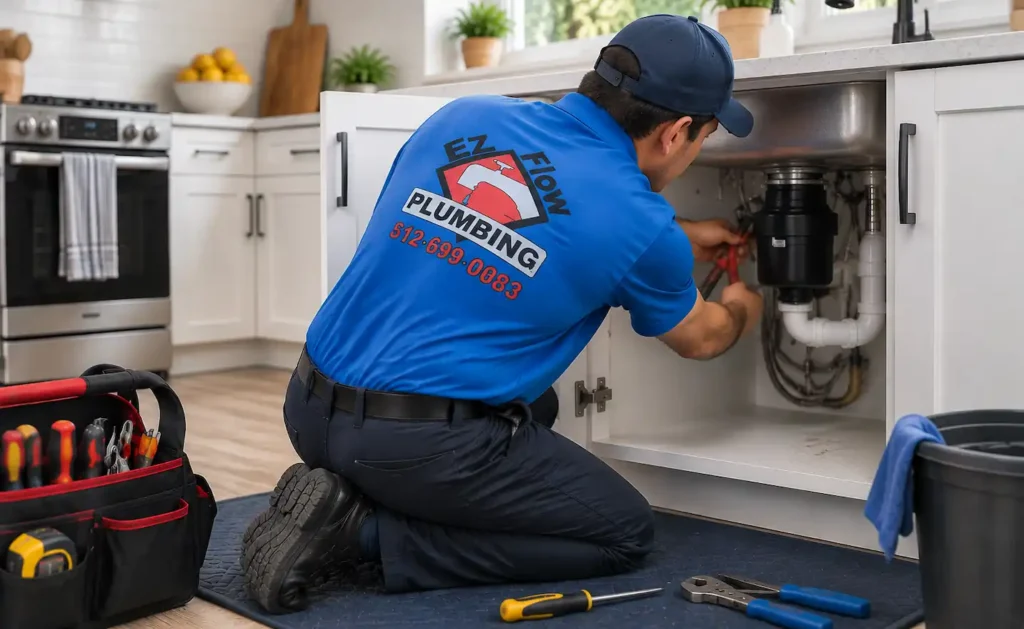
Does a toilet need a vent is a question that shows up in two different situations for Austin homeowners. The first is during troubleshooting, when a toilet gurgles after flushing, a sewage smell drifts through the bathroom without any visible cause. The second is during a bathroom renovation, when plumbing code requirements surface and the homeowner wants to understand what the vent requirement actually means before construction moves forward. In both situations the answer is the same: yes.
We handle venting-related service calls across Austin, Pflugerville, Round Rock, Georgetown, and Hutto regularly, and the pattern is consistent. At EZ Flow Plumbing Texas, the question of does a toilet need a vent comes up in gurgling complaints, in renovation plans where a toilet is relocating away from the existing vent stack, and in older Austin properties where vent pipe has been partially blocked long enough that the symptoms have become a recurring pattern.
Does a toilet need a vent is not only a code compliance question. It is a system performance question, and the answer shapes how every symptom in the drain system gets read and diagnosed.
The Mechanics of Drain Venting: Why It Cannot Be Optional
Does a toilet need a vent? It becomes straightforward once the hydraulics of drain flow are clear. When a toilet flushes water goes down the drain pipe because of gravity. As the water moves it pushes the air in front of it through the pipe. If that air can’t escape pressure builds up in front of the water. A vacuum forms behind it. That vacuum pulls the water out of the p-traps that are connected to the drain line.
The p-trap is the part of the pipe, under each sink or toilet. It holds some water that stops smells from the sewer from coming up into the house. When a toilet flushes and creates much negative pressure it can pull the water out of another p-trap breaking the seal.
The vent pipe solves the problem by letting air into the drain system. Air coming in through the vent balances the pressure that the flowing water creates and lets each toilet or sink drain properly without messing up the water seals in p-traps. That is why does a toilet need a vent produces the same answer in every adopted plumbing code: yes, and the vent must connect to the toilet drain within a code-specified distance from the trap before the installation is considered safe.
What the Plumbing Code Requires for Toilet Venting in Austin
Does a toilet need a vent under code is not a question with any interpretive flexibility. The International Plumbing Code is used in Texas and in Austin it is applied with changes by the City of Austin Development Services Department. This code says that every trap in a drain system must have a vent. For a toilet this means a vent pipe must connect to the toilet drain within a distance from the trap. This helps stop siphonage and keeps the water seal in the p-trap from being broken when water flows through.
The exact distance from the trap, to the vent and the smallest size of the pipe depends on what kind of fixture it’s the size of the drain pipe. But the main rule stays the same: the toilet drain must be able to connect to the air through a vent pipe. This must happen no matter what even if the toilet drains fine when only one fixture is being used. A toilet might flush normally when one thing is running.
Symptoms That Point Toward Venting vs. Other Drain Conditions
Does a toilet need a vent becomes a diagnostic question when specific symptoms appear that could trace to a venting failure or to a drain restriction that produces similar signals. Identifying which category a symptom belongs to before calling a plumber helps describe the situation accurately and focuses the inspection on the most probable cause from the start.
| Symptom | Consistent With Venting Problem | Other Possible Cause |
| Gurgling from the toilet after flushing | Yes, negative pressure pulling the p-trap seal | Partial restriction in the trap or branch drain |
| Slow drainage without any visible blockage | Yes, inadequate air supply reducing drain rate | Partial clog layering on pipe walls |
| Sewage smell without visible leak or standing water | Yes, siphoned p-trap allowing sewer gas through | Dry trap from non-use, failed wax ring at base |
| Gurgling from a nearby sink when toilet flushes | Yes, shared drain line losing air supply | Shared drain restriction affecting multiple fixtures |
| Toilet bubbles when the washing machine drains | Yes, main vent blocked or undersized | Main drain restriction near the laundry connection |
| Odor that comes and goes without pattern | Yes, p-trap seal intermittently compromised | Infrequently used fixture with evaporating trap seal |
The Vent Stack: What It Does and What Blockage Looks Like
Does a toilet need a vent connected directly to the condition of the main vent stack, which is the primary pipe linking the building’s entire drain system to the atmosphere above the roof. In Austin residential construction the vent stack is a vertical pipe that runs through the building structure and exits above the roofline. I notice that every fixture connects to the vent stack either or through branch vents. The vent stack is the air source the entire drain system draws on during every use event.
When the main vent stack becomes blocked, every fixture in the home can show symptoms under high-demand conditions, and the most heavily used drains, typically the toilets and tub or shower nearest the main line, tend to show symptoms first. Bird nests, accumulated leaf and seed debris, and in older Austin homes, corrosion at the roof penetration connection, are the most common sources of vent stack blockage.
Air Admittance Valves: Where They Work and Where They Fall Short
Does a toilet need a vent through a pipe that reaches the roof is a question that comes up most often in renovation contexts where running new vent pipe through existing walls, ceiling cavities, and the roof surface is either structurally difficult or cost-prohibitive. An air admittance valve is a mechanical device that allows air to enter the drain locally at the fixture level without requiring a pipe connection to the main vent stack or the roof.
An AAV operates on a simple principle: a spring-loaded seal opens under negative pressure to admit air and closes under neutral or positive pressure to prevent sewer gases from escaping. The device installs within the drain connection and eliminates the need for traditional vent pipe in certain configurations.
The limitation is that an AAV does not supply the positive pressure relief a traditional vent connection provides, and it requires accessible placement for periodic inspection. Some configurations require an access panel when the device is enclosed in a wall cavity.
Why Austin Homes Are Particularly Vulnerable to Venting Failures
Does a toilet need a vent is a more practically relevant question in Austin than the general framing might suggest, and several local conditions explain why venting failures appear in Central Texas homes at a frequency that surprises many property owners. A significant portion of Austin’s residential housing stock was built between the 1950s and 1980s, when cast iron and galvanized steel vent pipes were the standard materials.
Austin’s tree canopy creates a consistent maintenance issue. Pecan, live oak, cedar elm, and Texas ash are common throughout Austin neighborhoods, and their leaves, seeds, and small branches accumulate in rooftop vent openings across the seasons. A vent stack with a partial debris blockage does not always produce noticeable symptoms until a high-demand drainage event reveals the inadequate air supply.
The expansive clay soil throughout Central Texas adds a third local factor. The same soil movement that drives slab leak situations in Austin can shift drain and vent pipe connections in under-slab or crawl space configurations, creating partial disconnections in the vent path.
What a Toilet Venting Inspection Actually Involves
Does a toilet need a vent in a specific Austin home is a question a licensed plumber answers through systematic inspection rather than assumption, particularly when the presenting symptoms could trace to either a venting failure or a drain condition that produces similar signals. The inspection follows a sequence that produces a complete system picture before any repair is recommended.
In Austin homes where the symptom pattern suggests a partial blockage rather than a missing vent connection, a plumber may clear the vent stack from the roof using a snake or compressed air and retest at the fixtures to confirm whether the symptoms resolve.
Venting Errors in Austin Bathroom Remodels That Show Up Later
Does a toilet need a vent? This question is answered incorrectly in renovation projects more often than most homeowners realize. The consequences of that error do not always appear during construction. A remodeled toilet that drains well during post‑construction testing can develop persistent gurgling, odor and slow drain complaints once normal household usage resumes and the system is under regular demand.
The common error is relocating a toilet without accounting for the new distance from the existing vent connection. Plumbing code specifies trap‑to‑vent distances, by drain pipe diameter. A toilet moved to a position that exceeds that distance without a vent connection is effectively unvented, even if it performs well during light‑use testing. The problem builds as daily usage normalizes and drainage demand increases.
Our toilet plumbing repairs page covers the full scope of what we assess and address for toilet and drain venting issues across Austin and Central Texas, including post-remodel symptom evaluation.
Getting a Clear Answer Before the Problem Develops Further
Does a toilet need a vent in your specific Austin property is a question a licensed plumber answers through a systematic inspection of the fixture, the drain connection, and the vent stack rather than through symptom-based assumption. The repair that follows that inspection is almost always simpler and less costly when the vent condition is confirmed first rather than discovered after a clog treatment or toilet replacement fails to resolve the original complaint.
A homeowner who recognizes that gurgling, intermittent sewage odor, and slow drainage without a visible clog are consistent with a venting failure describes the situation more accurately before the service call. That accuracy shortens the diagnostic and makes the visit more productive. Treating the drain for a clog or replacing the toilet without confirming the vent condition leaves the underlying cause completely in place while the symptoms return on the same timeline.
If your Austin-area bathroom is producing symptoms that suggest a venting problem and you want a direct answer on what the system actually needs before any work begins, contact EZ Flow Plumbing Texas to book a plumbing visit and have the toilet venting situation assessed by a licensed plumber before the issue develops further.