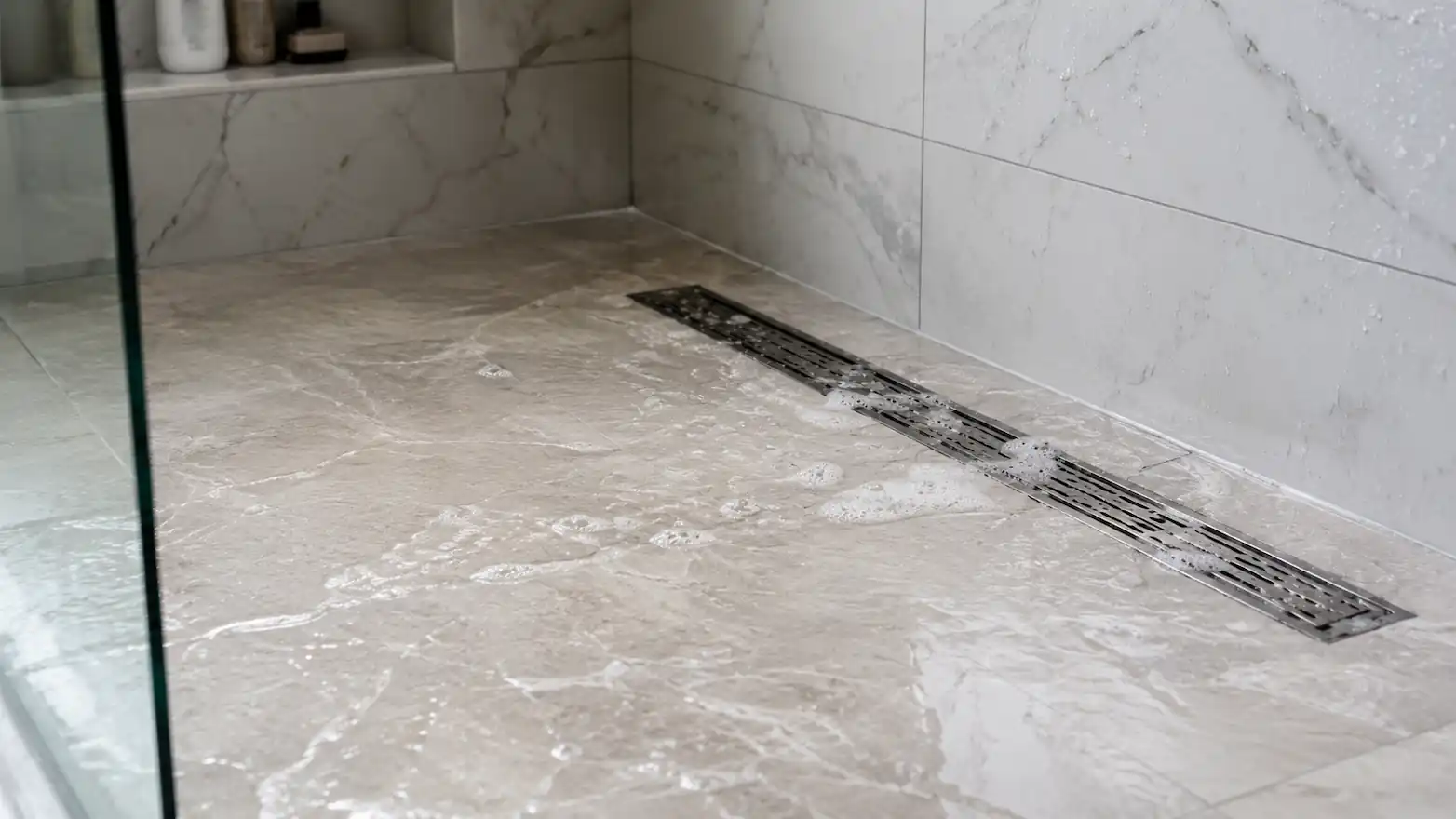
When you take a shower, you might notice that there is standing Water in the Shower Drain. This happens when the water flows into the drain faster than it can flow out. The problem can be right under the part that catches hair, or it can be deeper in the pipes under the floor or further down in the main pipe that all the water flows into.
The way the water builds up in the shower drain is important to know. If the water stays in the drain after you have been showering for a minutes it is different from when the drain fills up really fast and does not empty until you use the shower again. Each of these patterns means that there is a blockage in the pipes, and it helps us figure out where the problem is.
At EZ Flow Plumbing Texas, we always ask two questions when someone has a problem with their shower drain: how long has the water been staying in the drain, and does the problem come back after we clear the drain? The answers to these questions tell us more about what’s causing the standing water in the shower drain problem.
Two Patterns That Point Toward Different Causes of Standing Water in the Shower Drain.
Standing water in the shower drain happens in one of two patterns, and each pattern helps figure out what’s going on before looking at anything.
The first pattern is when it starts slowly. The drain gets slower over weeks or months, moves from slow to much slower, and eventually water stays in the drain during a normal shower. This slow change shows something that grows over time, like buildup from material that adds up or minerals that collect on the inside of the pipe in Austin, where the water is hard, or roots that slowly grow into the pipe.
The second pattern is when it happens at once. The drain works fine. Then the next day or after a shower, water starts to pool without any warning. This sudden change shows something that blocks the way quickly, like a clump of hair that moves and stops the water, or an object that goes past the strainer and gets stuck in the trap, or a pile of dirt that becomes too big to move.
Each sequence calls for a different tool and a different scope. A sudden blockage typically responds to a single professional clearing visit. A gradual restriction that developed over months often involves pipe wall buildup that a snake clears at the center without touching the layer along the walls, which is why the same drain slows again within weeks of clearing.
Where Restrictions Form and What Each Location Produces
The location of the restriction shapes both the symptom pattern and the repair. Understanding where standing water in the shower drain typically originates helps a homeowner describe the situation accurately before the plumber arrives.
- At the drain opening and strainer: Hair, soap film, and skin debris compress on and just below the strainer over weeks of use. The drain slows gradually and clears easily with manual removal or a short snake run. This is the most frequent source and the most straightforward fix.
- In the p-trap below the floor: Soap scum and mineral deposits that passed the strainer settle in the curved section directly beneath the shower. Chemical cleaners rarely reach this area in useful concentration. A snake long enough to navigate the curve is the minimum tool needed to address it.
- In the branch drain line: A longer restriction builds along the pipe running from the shower to the main stack. The drain does not respond fully to a short snake and slows again within days of clearing because the buildup along the pipe walls was not addressed, only penetrated at the center.
- At the main stack or sewer connection: A restriction this far downstream affects multiple fixtures simultaneously. A toilet that gurgles when the shower drains, or a sink nearby that also backs up, points to a problem well past the individual shower line.
Standing Water vs. a Slow Drain: Why the Difference Matters for the Diagnosis
Standing water in the shower drain and a slow-draining shower are related but distinct symptoms, and the difference between them carries useful diagnostic information. A slow drain means flow is restricted but still moving, indicating a partial obstruction. Standing water in the shower drain means the flow rate has dropped below what the showerhead produces, indicating a more substantial restriction or one approaching a complete seal.
A drain that went from slow to standing over several weeks is telling a story about a restriction that has been growing. The progression rules out a sudden foreign object and points toward buildup, root intrusion, or mineral deposit. Each of those has a different fix and a different urgency, and none of them responds reliably to a chemical drain cleaner.
A drain that went from normal to standing without any gradual warning points toward a sudden mechanical blockage.
Signals That the Problem Is Deeper Than the Drain Opening
Most standing water in the shower drain situations resolve with professional drain cleaning targeting the restriction in the shower line. Some involve a condition further downstream that snaking the shower line alone will not fix. Recognizing the signals that point toward a deeper problem before any clearing is attempted saves the homeowner from a repair that addresses the wrong section of the system.
These are the indicators that the restriction is not at or near the drain opening:
- Multiple fixtures in the home slow or back up at the same time
- The toilet gurgles or bubbles when the shower runs or empties
- A sewage odor appears near the drain without a visible surface clog
- The drain clears after professional service but slows again within a week
- Water backs up into the shower when the washing machine drains
- The shower has never flowed normally since a bathroom renovation
Why Chemical Drain Cleaners Often Make Things Worse
Chemical drain cleaners are a common first response to standing water in the shower drain, and they work in a limited set of conditions: soft organic clogs close to the drain opening that the chemical can reach and dissolve before diluting in standing water. Outside that range, the results are rarely what the label suggests.
In Austin homes with older cast iron or galvanized drain pipes, caustic drain cleaners accelerate corrosion on pipe walls that are already in declining condition. Repeated chemical treatment creates surface pitting that catches debris more aggressively, which shortens the interval between clogging events rather than extending it. The short-term improvement comes at a measurable long-term cost to the pipe itself.
Chemical cleaners also do not address mineral and soap scum buildup along pipe walls, which is one of the more persistent causes of recurring standing water in the shower drain in Austin’s hard water environment.
How Austin’s Hard Water Accelerates Shower Drain Problems
Austin’s water supply carries elevated calcium and magnesium concentrations that leave mineral deposits on every surface the water contacts. Inside shower drain lines, those deposits combine with soap scum and skin oils to form a progressively thickening layer on the pipe wall that narrows the effective diameter of the drain with every shower.
That is why standing water in the shower drain tends to develop gradually in Austin homes rather than suddenly, and why the interval between clogging events is shorter here than in softer water regions.
The hard water factor also explains why the same drainage habits that produce a drain cleared every eight or nine months elsewhere may produce one that needs attention every three months in Central Texas. The pipe wall is coating faster than the clearing frequency accounts for, and until that coating is addressed rather than just penetrated, the cycle continues.
What a Professional Drain Assessment Covers Before Any Clearing Begins
A professional assessment for standing water in the shower drain starts with the drainage history before any equipment enters the line. How long has the water been pooling? Has the drain been professionally cleared before, and how long did that hold? Are other fixtures in the home draining normally? Those three questions locate the restriction in the system before the physical inspection begins.
The hands-on assessment covers the drain opening and strainer for visible accumulation, a snake run to identify where resistance appears and what the cable retrieves, and a check of adjacent fixtures for any gurgling or backup that suggests a downstream issue.
Our clogged drain services page covers the full scope of what we assess and address across Austin and Central Texas. Reviewing it before booking gives a clear picture of what the drain visit involves and what the clearing options look like once the restriction is located.
Getting a Direct Answer on What the Drain Is Actually Doing
Standing water in the shower drain has a cause that is identifiable with the right diagnostic process. The repair that follows is almost always more straightforward once the location of the restriction is confirmed. The situations that stay unresolved the longest are the ones where the same surface-level approach is applied repeatedly without ever looking further into the line.
A drain that returns within weeks of clearing, affects more than one fixture, or has never been assessed with a camera despite repeated service visits is telling you that the current approach has not reached the actual problem. The right tool for that situation is a professional inspection, not another bottle of drain cleaner or a longer snake run.
If your shower has been pooling and you want a direct answer on where the restriction is and what it actually takes to clear it for good, contact EZ Flow Plumbing Texas to schedule clogged drain service and get a clear recommendation based on what your drain system is actually showing.