Copper vs galvanized pipe is a comparison of two materials that have both been used for residential supply pipe in the Austin area for a long time. The EPA drinking water standards that apply to residential supply systems apply to both of them, but the manner in which they fail, their service life and the options for repair or replacement are so different that a homeowner looking at a plumbing repair or a repipe are going to need to know which of the two materials they have.
Copper is the non-ferrous metal pipe that was the standard for residential water supply from the 1950s through the 1990s and is still used in new construction. Galvanized steel is an iron pipe with a zinc coating to prevent rust and was the standard for residential supply systems from the early 1900s through to the early 1970s. The difference is of practical importance as copper and galvanized pipe behave very differently in Austin’s water and soil.
We work with homeowners all over Austin, Pflugerville, Round Rock, Georgetown and Hutto who are looking at their pipe systems and wanting a real assessment of what they’ve got and what it all means. The copper vs galvanized pipe question comes up time and time again at EZ Flow Plumbing Texas in the course of a pre-purchase inspection, a repipe consultation and in the course of a service call where the pipe material is the thing that will determine whether it’s a spot repair or whether it’s actually a case for a full re-pipe.
How Each Material Fails and Why It Matters in Austin
Copper vs galvanized pipe fail in completely different ways and it’s that difference in failure mode that enables a homeowner to actually read the symptoms their plumbing is giving them rather than just having to wait for the plumber to come and explain what’s going on.
Galvanized pipe fails from the inside out. The zinc lining which protects the steel from the inside is gradually consumed over the decades via a process known as dezincification. As the zinc is lost the steel underneath is left exposed to oxidation and forms rust deposits which build up progressively on the inside of the pipe wall. This reduces the effective internal diameter of the pipe over time, resulting in reduced water pressure and flow before the pipe wall itself fails.
Copper pipe fails from the outside in, or via pitting as a result of the water chemistry inside. In Austin’s hard water situation the mineral content of the supply will react with the copper surface over time to create pitting of the pipe wall which will eventually lead to pinhole leaks. The pitting process is localised and unpredictable.
The copper vs galvanized pipe failure timeline is also different. Galvanized steel in Austin’s water has a practical service life of 40 to 60 years before flow restriction and structural failure become the norm. Copper has a service life of 50 to 70 years, although in Austin’s hard water conditions the interval before pitting leaks appear in a system that has never had a water softener is considerably reduced.
Identifying Which Material You Have Without Opening a Wall
Copper vs galvanized pipe is readily distinguishable at the point of access in the home and a homeowner who can identify the pipe material at an accessible point has in effect already answered one of the most useful diagnostic questions prior to calling a plumber.
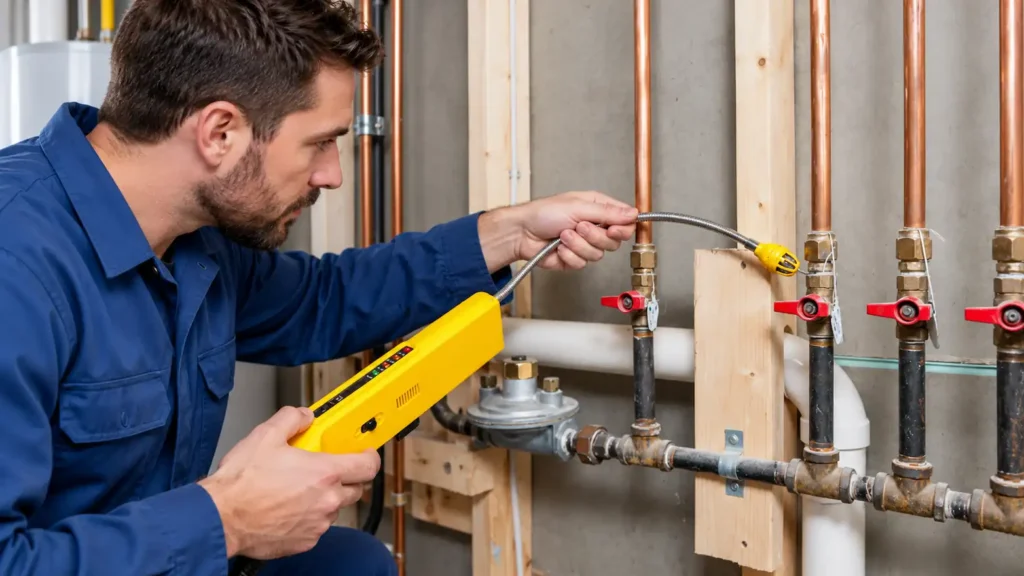
Copper pipe is of course identifiable by its characteristic reddish-brown/orange colour at the exposed sections (you’ll see it under the sink, in the utility room, wherever the supply lines run to the fixtures etc). Copper pipe that’s been in service for a long time will have a green patina on the outside. The pipe joints themselves are generally soldered, compression or push-fit.
Galvanized pipe is easily identifiable by its silver or dark grey colour, its heavier appearance as compared to copper and its threaded fittings at the joints rather than soldered joints. Older galvanized pipes may have visible rust at the joints and/or at any point where the zinc coating has been abraded or scratched. At any accessible cut ends where there is significant internal corrosion the pipe will have a distinct reddish brown rust build-up which will have visibly reduced the internal diameter in relation to the external diameter.
The Uniform Plumbing Code sets standards for acceptable pipe materials and conditions in residential water supply systems, and a licensed plumber who inspects the system against those standards gives the homeowner a documented assessment of where the system stands relative to current code.
Copper vs Galvanized Pipe: A Direct Comparison for Homeowners
The copper vs galvanized pipe comparison on the criteria that matter most for an Austin homeowner evaluating a repair or replacement decision:
| Criterion | Copper Pipe | Galvanized Steel Pipe |
| Typical service life in Austin | 50 to 70 years (shortened by hard water pitting) | 40 to 60 years (ends with flow restriction and structural failure) |
| How it fails | Pinhole leaks from interior pitting, exterior corrosion in aggressive soil | Interior rust buildup restricts flow, eventual wall failure |
| Effect on water quality | Clean water until pitting breach, then possible metallic taste | Rust-tinged or discolored water in advanced corrosion |
| Water pressure impact | Gradual pressure reduction at pitting sites | Whole-system pressure reduction from interior buildup |
| Repair approach | Spot solder repair or section replacement | Section replacement, often requires full repipe due to system-wide condition |
| Repipe material when replacing | Often replaced with PEX for longevity | Always replaced, PEX or HDPE preferred |
| Austin hard water sensitivity | High, pitting corrosion accelerated by mineral content | Moderate, zinc depletion rate is less directly driven by water hardness |
| Visibility of failure | Usually first appears as a drip at a specific point | Appears as reduced pressure and discolored water before structural failure |
The copper vs galvanized pipe distinction in the repair scope column is one of the most practically important differences for a homeowner receiving a plumbing repair proposal. A spot repair on a copper system where one pinhole appeared in an otherwise sound pipe is a legitimate scope.
Austin’s Hard Water and How It Affects Each Material Differently
Austin’s water is one of the hardest municipal water supplies in Texas and the degree of hardness has a different effect on copper vs galvanized pipe so the local context actually changes the service life expectations for the two pipe types.
For copper pipes in Austin the high levels of calcium and magnesium in the water accelerate the pitting corrosion mechanism which leads to pinhole leaks. The chemistry creates a very corrosive interface between the water and the copper which is more aggressive in the Austin water than it is in soft water areas.
For galvanized pipe in Austin the hard water has a different effect on the system. The zinc on the galvanized pipe does get used up via electrochemical processes, this is somewhat less directly a function of water hardness than copper pitting is, and the rust that forms as the zinc is used up does incorporate the calcium and scale from the Austin water into the rust deposits.
When Copper vs Galvanized Pipe Becomes a Repipe Conversation
Copper vs galvanized pipe status is what determines when a plumbing service call transitions from a repair scope to a repipe conversation, and a homeowner who understands that threshold can evaluate a repipe recommendation with more context than simply accepting or rejecting the suggestion.
A copper system moves toward repipe when:
- Multiple pinholes have appeared in different sections within a two to three year period
- Camera or visual inspection reveals widespread pitting throughout the accessible pipe sections
- The system is over 60 years old with no prior replacement of supply lines
- A spot repair has been performed more than once on the same section
A galvanized system moves toward repipe when:
- Water pressure throughout the home has declined noticeably and does not respond to regulator adjustment
- Discolored water is present regularly, not only after idle periods
- The system has been in service for 50 or more years
- Any section of the system is replaced and the adjacent galvanized sections are visible at the cut end showing significant interior corrosion
A galvanized system that shows any of those conditions is one where spot repair is economically and practically indefensible.
The Repipe Material Question: What Replaces Copper vs Galvanized Pipe
Copper vs galvanized pipe is very rarely the same material in a modern day repipe project and understanding the alternatives is key to a homeowner being able to assess what they’re being quoted.
PEX (cross-linked polyethylene) is the tubing used in the vast majority of current Austin residential repipe projects as a replacement for both copper and galvanized supply systems. It doesn’t corrode, it doesn’t build up scale internally, it’s rated for a 50+ year service life under normal conditions and its flexibility means it can be run through existing wall cavities with a lot less wall opening than rigid pipe would require.
Copper is still a valid replacement in certain situations (visible supply runs, code required areas, where rigid pipe is the preferred option). The cost of a copper repipe is generally 25-40% more than PEX for the same job and in Austin’s hard water situation the copper is going to be subject to pitting corrosion over that same 50+ year period that the PEX would be completely free of corrosion. PEX is the more sensible long term choice for the majority of whole house repipe projects.
Our plumbing repairs service page covers the full scope of what we assess and address for supply line conditions across Austin and Central Texas.
Getting a Pipe Condition Assessment That Leads to the Right Decision
Copper vs galvanized pipe assessment carried out properly will result in a confirmed identification of the pipe material, a condition assessment of the accessible sections and a recommendation which will clearly delineate between a repair only scope and a replacement scope with the findings to back up that recommendation.
That sequence of assessment first and then recommendation second is what separates a service visit that gives the homeowner a defensible decision from one that just throws out a full repipe on the basis of pipe age alone without actually assessing the condition of the pipes.
A homeowner who’s got the copper vs galvanized pipe issue down pat, who knows what the water quality is going to tell them in terms of the symptoms and can describe the history of the service accurately prior to the plumber getting there, is going to be a massive help in terms of the assessment being both accurate and efficient.
If you are evaluating your pipe system, received a repipe recommendation, or are seeing symptoms that suggest your pipe material may be the source of the problem, contact EZ Flow Plumbing Texas for a direct assessment before committing to any direction.